in/on/among In, on, among. ἐν, prep, (the most freq. of all in NT), c. dat. (= Heb. בְּ, Lat. in, c. abl.). Of place, c. dat. rei, pers., in, within, on, at, by, among: ἐν τ. πόλει, Lk 7:37; τ. οφθαλμῷ, Mt 7:3; τ. κοιλίᾳ, Mt 12:40; τ. ὄρει, II Pe 1:18; τ. θρόνῳ, Re 3:21; τ. δεξιᾷ τ. θεοῦ, Ro 8:34; ἐν ἡμῖν Abbott-Smith has ὑμῖν., Lk 1:1; of books, ἐν τ. βιβλίῳ, Ga 3:10; τ. νόμῳ, Mt 12:5, al.; ἐν τοῖς τ. Πατρός, in my Father's house (RV; cf. M, Pr., 103), Lk 2:49; trop., of the region of thought or feeling, ἐν τ. καρδίᾳ (-αις), Mt 5:28, II Co 4:6, al.; τ. συνειδήσεσιν, II Co 5:11; after verbs of motion, instead of εἰς ( constructio praegnans, a usage extended in late Gk. beyond the limits observed in cl.; cf. Bl., §41, 1; M, Th., 12), ἀποστέλλω... ἐν, Mt 10:16. δέδωκεν ἐν τ. χειρί (cf. τιθέναι ἐν χερσί, Hom., Il., i, 441, al.), Jo 3:35; id. after verbs of coming and going (not in cl.), εἰσῆλθε, Lk 9:46; ἐξῆλθεν, Lk 7:17. Of state, condition, form, occupation, etc.: ἐν ζωῇ, Ro 5:10; ἐν τ. θανάτῳ, I Jo 3:14; ἐν πειρασμοῖς, I Pe 1:6; ἐν εἰρήνῃ, Mk 5:25; ἐν δόξῃ, Phl 4:19; ἐν πραΰτητι, Ja 3:13; ἐν μυστηρίῳ, I Co 2:7; ἐν τ. διδαχῇ, Mk 4:2; of a part as contained in a whole, ἐν τ. ἀμπέλῳ, Jo 15:4; ἐν ἑνὶ σώματι, Ro 12:4; of accompanying objects or persons (simple dat. in cl.), with, ἐν αἵματι, He 9:25; ἐν δέκα χιλιάσιν, Lk 14:31 (cf. Ju 14, Ac 7:14 ); similarly (cl.), of clothing, armour, arms, ἐν στολαῖς, Mk 12:38; ἐν ἐσθῆτι λαμπρᾷ, Ja 2:2; ἐν μαξαίρῃ, Lk 22:49; ἐν ῥάβδῳ, I Co 4:21 (cf. ἐν τόξοις, Xen., Mem., 3, 9, 2); of manner (cl.), ἐν τάχει (= ταχέως ), Lk 18:8 (cf. Bl., §41, 1); of spiritual influence, ἐν πνεύματι, Ro 8:9; ἐν π. ἀκαθάρτῳ, Mk 1:23; of the mystical relation of the Christian life and the believer himself, to God and Christ (cf. ICC, Ro., 160f.; Mayor on Ju 1; M, Pr., 103): ἐν Χριστῷ, Ro 3:24, 6:11, I Co 3:1, 4:10, II Co 12:2, Ga 2:17, Eph 6:21, Col 4:7, I Th 4:16, al. Of the agent, instrument or means (an extension of cl. ἐν of instr.—v. LS, s.v. Ill—corresponding to similar use of Heb. בְּ ), by, with: ἐν ὑμῖν κρίνεται ὁ κόσμος (= cl. παρά, C. dat.), I Co 6:2; ἐν τ. ἄρχοντι τ. δαιμονίων, Mt 9:34; ἐν αἵματι, He 9:22; ἐν ὕδατι, Mt 3:11, al.; ἐν μαχαίρᾳ ἀποκτενεῖ (cf. the absol. ἐν μ., ἐν ῥάβδῳ, supr., II, which some would classify here), Re 13:10 (cf. 6:8 ). Allied to this usage and distinctly Semitic are the following: ἠγόρασας... ἐν τ. αἵματι σου (cf. BDB, s.v. בְּ, III, 3), Re 5:9; ὁμολογεῖν ἐν (= Aram. אודי בּ; cf. McNeile on Mt, I.c.; M, Pr., 104), Mt 10:32, Lk 12:8; ὀμνύναι ἐν (= cl. acc., so Ja 5:12 ), Mt 5:34, al.; also at the rate of, amounting to, Mk 4:8 (WH; vv. ll., εἰς, ἒν ), Ac 7:14 (LXX). Of time, in or during a period: ἐν τ. ἡμέρᾳ (νυκτί), Jo 11:9, al.; ἐν σαββάτῳ, Mt 12:2, al.; ἐν τῷ μεταξύ, meanwhile, Jo 4:31; at the time of an event: ἐν τ. παρουσίᾳ, I Co 15:23; ἐν τ. ἀναστάσει, Mt 22:28; c. art. inf., pres. (so sometimes in cl., but not as in NT = ἕως; V. M, Pr., 215), while: Mt 13:4, Mk 6:48, Ga 4:18, al.; aor., when, after: Lk 9:36, al.; within (cl.): Mt 27:40, In composition: (1) meaning: (a) with adjectives, it signifies usually the possession of a quality, as ἐνάλιος, ἐν́δοξος; (b) with verbs, continuance in (seq. ἐν ) or motion into (seq. εἰς ), as ἐμμένω, ἐμβαίνω. (ii) Assimilation: ἐν becomes ἐμ- before β, μ, π, φ, ψ; ἐγ- before γ, κ, ξ, χ; ἐλ- before λ. But in the older MSS of NT, followed by modern editions, assimilation is sometimes neglected, as in ἐνγράφω, ἐγκαινίζω, etc. Scroll for more
that That, that one there, yonder. ἐκεῖνος, -η, -ο (< ἐκεῖ ), [in LXX chiefly for הַהוּא,הוּא, and cogn. forms;] demonstr. pron., that person or thing ( ille ), implying remoteness as compared with οὗτος ( hic ); absol., emphatic he, she, it: opp. to οὗτος, Lk 18:14, Ja 4:15; ἡμεῖς, He 12:25; ὑμεῖς, Mt 13:11, Mk 4:11; ἄλλοι, Jo 9:9; ἐγώ, Jo 3:30; to persons named, Mk 16:[ 10, 13, 20 ], Jo 2:21; of one (absent) who is not named, contemptuously (Abbott, JG, §§2385, 2732), Jo 7:11 9:28; with respect, of Christ, I Jo 2:6 3:3, al.; referring to a preceding noun, Mk 16:[10], Jo 7:45; resumption of a participial subject, Jo 1:33 9:37 10:1, Ro 14:14, al. (on its reference in Jo 19:35, v. Westc, in l.; Moffatt, Intr., 568; Sanday, Fourth Gospel, 77ff.). As adj., joined, like οὗτος, to a noun with the article: Mt 7:25, Mk 3:24, Jo 18:15, al.; esp. of time, past or future: ἐν τ. ἡμέραις ἐ., Mt 3:1, Mk 1:9, Ac 2:18 (LXX), al.; ἐν ἐ. τ. ἡμέρᾳ, esp of the Parousia, Mt 7:22, Lk 6:23, II Th 1:10, II Ti 1:12; adverbially, ἐκεινής (sc. ὁδοῦ ) = cl. ἐκεινῇ (Bl., §36, 13), that way, Lk 19:4. Scroll for more
the/this/who The, the definite article. ὁ, ἡ, τό, the prepositive article ( ἄρθρον προτακτικόν ), originally a demonstr. pron. (so usually in Hom.), in general corresponding to the Eng. definite article. As demonstr. pron. As freq. in Hom., absol., he ( she, it ), his (etc.): Ac 17:28 (quoted from the poet Aratus). Distributive, ὁ μὲν... ὁ δέ, the one... the other: I Co 7:7, Ga 4:22; pl., Ac 14:4, 17:32, Phl 1:16, al.; οἱ μὲν... ἄλλοι δέ, Mt 16:14, Jo 7:12; οἱ μεν̀... ὁ δέ, He 7:21, 23. In narration (without ὁ μὲν preceding), ὁ δέ, but he: Mt 2:14, Mk 1:45, Lk 8:21, Jo 9:38, al. mult. As prepositive article, the, prefixed, to nouns unmodified: ὁ θεός, τὸ φῶς, etc.; to abstract nouns, ἡ σοφία, etc., to pl. nouns which indicate a class, οἱ ἀλώπεκες, foxes, Mt 8:20, al.; to an individual as representing a class, ὁ ἐργάτης, Lk 10:7; c. nom. = voc. in addresses, Mt 11:26, Jo 19:3, Ja 5:1, al.; to things which pertain to one, ἡ χεῖρ, his hand, Mk 3:1; to names of persons well known or already mentioned; usually to names of countries (originally adjectives), ἡ Ἰουδαία, etc. To modified nouns: c. pers. pron. gen., μοῦ, σοῦ, etc.; c. poss. pron., ἐμός, σός, etc.; c. adj. between the art. and the noun, ὁ ἀγαθὸς ἄνθρωπος, Mt 12:35; the noun foll. by adj., both c. art., ὁ ποιμὴν ὁ καλός, Jo 10:11 (on ὁ ὄχλος πολύς, Jo 12:9, v. M, Pr., 84); before adjectival phrases, ἡ κατ’ ἐκλογὴν πρόθεσις, Ro 9:11. To Other parts of speech used as substantives; neuter adjectives: τ. ἀγαθόν, etc.; cardinal numerals: ὁ εἶς, οἷ δύο, etc.; participles: ὁ βαπτίζων (= ὁ Βαπτιστής, Mt 14:2 ), Mk 6:14; πᾶς ὁ, c. ptcp., every one who, etc.; adverbs: τὸ πέραν, τὰ νῦν, ὁ ἔσω ἄνθρωπος; infinitives: nom., τὸ θέλειν, Ro 7:18, al.; gen., τοῦ, after adjectives, ἄξιον τοῦ πορεύεσθαι, I Co 16:4; verbs, ἔλαχεν τοῦ θυμιᾶσαι, Lk 1:9; and freq. in a final sense, ἐξῆλθεν ὁ σπείρειν, Mt 13:3 (on the artic. inf., v. Bl., § 71). In the neut. to sentences, phrases or single words treated as a quotation: τὸ Ἐι δύνῃ, Mk 9:23; τὸ ἔτι ἅπαξ, He 12:27; τὸ ἀνέβη, Eph 4:9, al. To prepositional phrases: οἱ ἀπὸ Ἰταλίας, He 13:24; οἱ ἐκ νόμου, Ro 4:14; neut. acc. absol., in adverbial phrases, τὸ καθ’ ἡμέραν, daily, Lk 11:3; τὸ κατὰ σάρκα, as regards the flesh, Ro 9:5. To nouns in the genitive, denoting kinship, association, etc.: ὁ τοῦ, the son of (unless context indicates a different relationship), Mt 10:2, al.; τὰ τοῦ θεοῦ, the things that pertain to God, Mt 16:23; τὰ τῆς εἰρήνης, Ro 14:19 (cf. M, Pr., 81 ff.; Bl, §§ 46, 47). Scroll for more
day A day, the period from sunrise to sunset. ἡμέρα, -ας, ἡ, [in LXX chiefly (very freq.) for יוֹם;] day; as distinct from night: gen. ἡμέρας, by day (WM, §30, 11), Re 21:25; ἡ. κ. νυκτός (ν. κ. ἡ.), Ac 9:24, I Th 2:9, II Th 3:8, Re 4:8 (Bl., §36, 13); ἡμέρας μέσης, at mid-day, Ac 26:13; acc. durat., τ. ἡμέρας, Lk 21:37; ὅλην τὴν ἡ., Ro 8:36; ἐν ἡμέρᾳ, Jo 11:9, Ro 13:13; ἡμέρας ὁδός, a day's journey, Lk 2:44; ἡ. γίνεται, Lk 4:42 22:66; κλίνει, Lk 9:12, al.; metaph., Jo 9:4, Ro 13:12, I Th 5:4, 5, 8, II Pe 1:19. Of a civil day of 24 hours, incl. night: Mt 6:34, Mk 6:21, Lk 13:14, al.; τρίτῃ ἡ., Mt 16:21; ἡμέρᾳ κ. ἡ. (cf. יוֹם בְּיֹום, Es 3:4 ), II Co 4:16; ὅλην τ. ἡ., Ro 8:36 10:21; pl., Jo 2:12, Ac 9:19, al.; ἡ. τῶν ἀζύμων, Ac 12:3; τ. σαββάτου, Lk 13:14, 16; ἡ κυριάκη ἡ., Re 1:10. In Messianic sense, of the last day: ἡ ἡ. ( ἐκείνη, τ. κυρίου, etc.), Mt 7:22, Lk 6:23, Ro 13:12, I Co 1:8, I Th 5:2, II Th 2:2, II Pe 3:10, al.; by meton., as compared with the divine judgment on that day, ἡ. ἀνθρωπίνη, of a human tribunal, I Co 4:3 (EV, man's judgment ). As in Heb. (also in Gk. writers; Bl., §46, 9; M, Pr., 81), of time in general: Jo 8:56 14:20, II Co 6:2, Eph 6:13, II Pe 3:18; pl., Ac 15:7, Eph 5:16, He 10:32; πᾶσας τὰς ἡ. (cf. כָּל הַיָּמִים, De 4:40, al.; MM, Exp., xv), Mt 28:20; ἐλεύσονται ἡ. ὅταν (ὅτε), Mt 9:15, Mk 2:20, Lk 5:35 17:22; αἱ ἡ., c. gen. pers. ( Ge 26:1, al.), Mt 2:1, Lk 1:5, Ac 7:45, I Pe 3:20; ἀρχὴ ἡμερῶν, He 7:3. Scroll for more
which Who, which, what, that. ὅς, ἥ, ὅ, the postpositive article ( ἄρθρον ὑποτακτικόν ). As demonstr. pron. = οὗτος, ὅδε, this, that, also for αὐτός, chiefly in nom.: ὅς δέ, but he (cf. ἦ δὲ ὅς, freq. in Plat.), Mk 15:23, Jo 5:11; ὃς μὲν... ὃς δέ, the one... the other, Mt 21:35 22:5 25:15, Lk 23:33, Ac 27:14, Ro 14:5, I Co 11:21, II Co 2:16, Ju 22; neut., ὃ μὲν... ὃ δέ, the one... the other, some... some, Mt 13:8, 23, Ro 9:21; ὃς ( ὃ ) μὲν... ( ἄλλος ( ἄλλο ))... ἕτερος ( -ο ), Mk 4:4, Lk 8:5, I Co 12:8-10; οὓς μέν, absol., I Co 12:28; ὃς μὲν... ὁ δέ, Ro 14:2. As relat. pron., who, which, what, that; agreeing in gender with its antecedent, but differently governed as to case: Mt 2:9, Lk 9:9, Ac 20:18, Ro 2:29, al. mult. In variation from the common construction; in gender, agreeing with a noun in apposition to the antecedent: Mk 15:16, Ga 3:16, Eph 6:17, al.; constr. ad sensum: Jo 6:9, Col 2:19, I Ti 3:16, Re 13:14, al.; in number, constr. ad sensum: Ac 15:36, II Pe 3:1; in case, by attraction to the case of the antecedent (Bl., § 50, 2): Jo 4:18, Ac 3:21, Ro 15:18, I Co 6:19, Eph 1:8, al. The neut. ὅ with nouns of other gender and with phrases, which thing, which term: Mk 3:17 12:42, Jo 1:39, Col 3:14, al.; with a sentence, Ac 2:32, Ga 2:10, I Jo 2:8, al. With ellipse of a demonstrative ( οὗτος or ἐκεῖνος ), before or after: before, Mt 20:23, Lk 7:43, Ro 10:14, al.; after, Mt 10:38, Mk 9:40, Jo 19:22, Ro 2:1 al. Expressing purpose, end or cause: Mt 11:10 ( who = that he may ), Mk 1:2, He 12:6 al. C. prep. as periphrasis for conjc.: ἀνθ’ ὧν ( = ἀντὶ τούτων ὧν ), because, Lk 1:20, al.; wherefore, Lk 12:3; ἐφ’ ᾧ, since, for that, Ro 5:12; ἀφ’ οὗ, since (temporal), Lk 13:25; ἐξ οὗ, whence, Phl 3:20; etc. With particles: ὃς ἄν ( ἐάν ), v.s. ἄν, ἐάν; ὃς καί, Mk 3:19, Jo 21:20, Ro 5:2, al.; ὃς καὶ αὐτός, Mt 27:57. Gen., οὗ, absol., as adv. (v.s. οὗ ). Scroll for more
will be εἰμί, with various uses and significations, like the English verb to be. As substantive verb. Of persons and things, to be, exist: Ac 17:28, Jo 1:1 8:58 17:5, al; ὁ ὢν καὶ ὁ ἦν (for past ptcp.), Re 1:4, 8 4:8 11:17 16:5 (v. Swete, Ap., 5; M, Pr., 228); τὰ (μὴ) ὄντα, Ro 4:17, I Co 1:28. Of times, events, etc., to be, happen, take place: Mt 24:3, Mk 14:2 15:42, Lk 21:23, Jo 4:6, 23 5:10, al. to be present, be in a place, have come: Mt 2:13, 15, Mk 1:45 5:21 15:40, Lk 1:80 5:29, Jo 7:30, al.; seq. εἰς, Mk 2:1; seq. ἐκ, (ἐξ), Mt 1:20 21:25, Mk 11:30, Jo 3:31, al. Impers., ἔστι, ἦν, etc.; there is (Fr. il y a ), was, etc.: Mt 16:28, Lk 16:19, Jo 3:1 5:2, Ro 3:10, al.; c. dat. (of the possessor; Bl., §37, 3), Mt 16:22, Lk 1:7, Jo 18.10, Ro 9:2, al.; ἔστιν ὅς, ὅστις (chiefly in pl), Mt 16:28 19:2, Mk 9:1, al.; c. inf., = ἔξεστιν (q.v.), it is possible: He 9:5, I Co 11:20, RV (but v. ICC, in l.). As copula uniting subject and predicate. Expressing simply identity or equivalence: Mt 5:13 14:15, Lk 1:18, 19, Jo 1:1 4:19, Re 3:9, al. mult. Explicative, as in parable, figure, type, etc.: Mt 13:19, I Co 9:2, 10:4, 11:25, Ga 4:24, Re 17:15, al.; τοῦτ’ ἔστιν, Mt 27:46, Mk 7:2, Ro 7:18 al.; ὅ ἐστιν, Mk 3:17, Col 1:24, He 7:2, al.; akin to this is the sacramental usage: Mt 26:26-28, Mk 14:22, 24, Lk 22:19, I Co 11:24 (v. ICC on Mk, I Co, ll. c.; DB, iii, 148 f.). C. gen.: qual., etc., Mk 5:42, Lk 3:23, I Co 14:33, He 12:11, al.; part., I Ti 1:20, II Ti 1:15; poss., Mt 5:3, 10, Mk 12:7, Lk 4:7; of service or partisanship, Ro 8:9, I Co 1:12, II Co 10:7, II Ti 2:19. C. dat. (BL, §37, 3): Ac 1:8 9:15, Ro 4:12, I Co 1:18 2:14, Re 21:7, al. C. ptcp., as a periphrasis for the simple verb (Bl., §62, 1, 2; M, Pr., 225 ff.); c. ptcp. pf. (cl.): Mt 10:30, Lk 9:32, Jo 3:24, Ac 21:35, I Co 15:19, al; c. ptcp. pr. (esp. in impf., as in Heb. and Aram.; Dalman, Words, 35 f.), Mt 7:29, Mk 1:22, Lk 4:31 14:1, Ac 1:10, al. mult., id. for imper. (M, Pr., 180f., 182f.), with ellipsis of εἰμί, Ro 12:9, 10, He 13:5, al.; c. ptcp. aor. (cl), Lk 23:9. Seq. εἰς (cf. Heb. הָיָה לְ ), a vernac. usage (M, Pr., 71): Mt 19:5, Mk 10:8, He 8:10, al. C. adv.: Mt 19:20, Mk 4:26, Lk 18:11, al. Ellipses; of the copula (Bl., §30, 3): Mt 8:29 24:32, Jo 21:22, 23, He 6:4, al.; of the predicate: ἐγώ εἰμί, Mt 14:27, Mk 6:50, al.; absol. (cf. De 32:39; אֲנִי הוּא ), Mk 13:6, Jo 4:26, al. (cf. ἄπ-, ἔν-, πάρ-, συμ-πάρ-, σύν-ειμι ). Scroll for more
upon/to/against On, to, against, on the basis of, at. ἐπί (before a smooth breathing ἐπ’, before a rough breathing ἐφ’ ), prep. c. gen., dat., acc. (acc. most freq. in NT), with primary sense of superposition, on, upon. C. gen., of place, answering the question, where? of the place on which, on, upon: ἐπὶ (τ.) γῆς, Mt 6:10, 19, al.; τ. κεφαλῆς, I Co 11:10; τ. νεφελῶν, Mt 24:30, al.; like ἐν, in constr. praegn. after verbs of motion: βάλλειν, Mk 4:26; σπείρειν, ib. 31; ἔρχεσθαι, He 6:7, al.; fig., ἐπ’ ἀληθείας (MM, s.v. ἀ. ); of the subject of thought or speech, Ga 3:16; of power or authority, over, πάντων, Ro 9:5: τ. γάζης, Ac 8:27; ἐξουσία, Re 2:26 20:6; of vicinity, at, by: τ. θαλάσσης, Jo 6:9; τ. ὁδοῦ, Mt 21:19; τοῦ βάτου, Mk 12:26 (v. Swete, in l.); c. gen. pers., in the presence of, before, Mt 28:14, Ac 23:30, I Co 6:1, al. Of time, c. gen. pers., in the time of: ἐπὶ Ἐλισαίου, Lk 4:27; ἐπὶ Κλαυδίου, Ac 11:28; ἐπὶ Ἀβιάθαρ ἀρχιερέως, when A. was high priest, Mk 2:26; c. gen. rei, at, at the time of: Mt 1:11, He 1:2, II Pe 3:3; ἐπὶ τ. προσευχῶν, Ro 1:10, Eph 1:16, I Th 1:2, Phm 4. C. dat., of place, answering the question, where? lit., on, upon: Mt 9:16, 14:8, al.; after verbs of motion (v. supr., I, 1, ( a )), Mt 9:16 Ac 8:16; above, Lk 23:38; at, by, Mk 13:29, Jo 5:2, Ac 5:9, al.; metaph., upon, on the ground of, Lk 4:4 (LXX); in the matter of, Mk 6:52 (v. Swete, in l.); upon, of, concerning, Ac 5:35, 40; of the ground, reason or motive (Bl., §38, 2; 43, 3), Mt 18:3 19:9, Ro 12:12, al.; ἐφ’ ᾧ, for the reason that, because, Ro 5:12 II Co 5:4; after verbs of motion, over, Mt 18:13, Ro 16:19, al.; of a condition (cl.), Ro 8:20, I Co 9:10; ἐπὶ δυσὶ μάρτυσιν (v. Westc. on He 9:10 ), He 10:28; of purpose or aim, Eph 2:10, Phl 4:10; of authority, over, Mt 24:47 Lk 12:44; of hostility, c. dat. pers. (cl.), against, Lk 12:52; in addition to (cl.), II Co 7:13; of an adjunct, in, at, on, Phl 1:3 2:17. C. acc., of place of motion upon or over, answering the question, whither? lit., upon, over: Mt 14:28, 29, Lk 5:19, al. mult.; in NT also, answering the question, where? (as c. gen., dat.), Mk 4:38 11:2, Lk 2:25, Jo 1:32; ἐπὶ τ. αὐτό, Ac 1:15 2:1, al.; of motion to a vicinity, to, Mk 16:2, Ac 8:36, al.; metaph. (in wh. "the acc. is more widely prevalent than it strictly should be," Bl., §43, 1); of blessings, evils, etc., coming upon one, c. acc. pers., Mt 10:13 12:28, Ac 2:17, Jo 18:4, Eph 5:6, al.; of addition (dat. in cl.), λύπη ἐπὶ λύπην, Phl 2:27; ἐπικαλεῖν ὄνομα ἐπί (v.s. ἐπικαλέω ), Ac 15:17, Ja 2:7; καλεῖν ἐπί, to call after, Lk 1:59; of number or degree: ἐπὶ τρίς (cl. εἰς τ. ), thrice, Ac 10:16 11:10; ἐπὶ πλεῖον, the more, further, Ac 4:17 II Ti 2:16 3:9 (v. also infr., 2, ( a )); ἐφ’ ὅσον (v. infr., ib.), forasmuch as, Mt 25:40, 45, Ro 11:13; of power, authority, control, Lk 1:33, Ac 7:10 Ro 5:14, He 3:6, al.; of the direction of thoughts and feelings, unto, towards, Lk 1:17 23:28, Ac 9:35, 42, Ro 11:22, Ga 4:9, Eph 2:7, I Ti 5:5, al.; of purpose, for, Mt 3:7, Lk 23:48; ἐφ’ ὅ πάρει (Rec. ἐφ’ ᾧ, Mt 26:50; of hostility, against, Mt 24:7, Mk 3:24-26 10:11 13:8, Lk 9:5, Jo 13:18, Ac 7:54, I Co 7:36, II Co 1:23; Of reference, concerning, for (cl. usually dat.), Mk 9:12 15:24, Jo 19:24, Ro 4:9. Of time, during, for: Lk 4:25 (WH, txt., omits ἐπί ), Ac 13:31 16:18, He 11:30, al.; ἐφ’ ὅσον (χρόνον), as long as, for so long time as, Mk 9:15 Ro 7:1, al. (for ἐφ’ ὅ in another sense, v. supr., 1, ( b )); ἐφ’ ἱκανόν (v.s. ἱ ), Ac 20:11; ἐπὶ πλεῖον (v. supr., 1, (b)), yet longer, further, Ac 20:9 24:4; on, about, towards (cl. εἰς ): Lk 10:35 Ac 3:1 4:5. In composition, ἐπί signifies: up, ἐπαίρω; upon, ἐπίγειος, ἐπιδημέω, ἐπικαθίζω; towards, επιβλέπω, ἐπεκτείνω; over (of superintendence), ἐπιστάτης; again, in addition, ἐπαιτέω; against, ἐπιορκέω, ἐπιβουλή. Scroll for more
the/this/who The, the definite article. ὁ, ἡ, τό, the prepositive article ( ἄρθρον προτακτικόν ), originally a demonstr. pron. (so usually in Hom.), in general corresponding to the Eng. definite article. As demonstr. pron. As freq. in Hom., absol., he ( she, it ), his (etc.): Ac 17:28 (quoted from the poet Aratus). Distributive, ὁ μὲν... ὁ δέ, the one... the other: I Co 7:7, Ga 4:22; pl., Ac 14:4, 17:32, Phl 1:16, al.; οἱ μὲν... ἄλλοι δέ, Mt 16:14, Jo 7:12; οἱ μεν̀... ὁ δέ, He 7:21, 23. In narration (without ὁ μὲν preceding), ὁ δέ, but he: Mt 2:14, Mk 1:45, Lk 8:21, Jo 9:38, al. mult. As prepositive article, the, prefixed, to nouns unmodified: ὁ θεός, τὸ φῶς, etc.; to abstract nouns, ἡ σοφία, etc., to pl. nouns which indicate a class, οἱ ἀλώπεκες, foxes, Mt 8:20, al.; to an individual as representing a class, ὁ ἐργάτης, Lk 10:7; c. nom. = voc. in addresses, Mt 11:26, Jo 19:3, Ja 5:1, al.; to things which pertain to one, ἡ χεῖρ, his hand, Mk 3:1; to names of persons well known or already mentioned; usually to names of countries (originally adjectives), ἡ Ἰουδαία, etc. To modified nouns: c. pers. pron. gen., μοῦ, σοῦ, etc.; c. poss. pron., ἐμός, σός, etc.; c. adj. between the art. and the noun, ὁ ἀγαθὸς ἄνθρωπος, Mt 12:35; the noun foll. by adj., both c. art., ὁ ποιμὴν ὁ καλός, Jo 10:11 (on ὁ ὄχλος πολύς, Jo 12:9, v. M, Pr., 84); before adjectival phrases, ἡ κατ’ ἐκλογὴν πρόθεσις, Ro 9:11. To Other parts of speech used as substantives; neuter adjectives: τ. ἀγαθόν, etc.; cardinal numerals: ὁ εἶς, οἷ δύο, etc.; participles: ὁ βαπτίζων (= ὁ Βαπτιστής, Mt 14:2 ), Mk 6:14; πᾶς ὁ, c. ptcp., every one who, etc.; adverbs: τὸ πέραν, τὰ νῦν, ὁ ἔσω ἄνθρωπος; infinitives: nom., τὸ θέλειν, Ro 7:18, al.; gen., τοῦ, after adjectives, ἄξιον τοῦ πορεύεσθαι, I Co 16:4; verbs, ἔλαχεν τοῦ θυμιᾶσαι, Lk 1:9; and freq. in a final sense, ἐξῆλθεν ὁ σπείρειν, Mt 13:3 (on the artic. inf., v. Bl., § 71). In the neut. to sentences, phrases or single words treated as a quotation: τὸ Ἐι δύνῃ, Mk 9:23; τὸ ἔτι ἅπαξ, He 12:27; τὸ ἀνέβη, Eph 4:9, al. To prepositional phrases: οἱ ἀπὸ Ἰταλίας, He 13:24; οἱ ἐκ νόμου, Ro 4:14; neut. acc. absol., in adverbial phrases, τὸ καθ’ ἡμέραν, daily, Lk 11:3; τὸ κατὰ σάρκα, as regards the flesh, Ro 9:5. To nouns in the genitive, denoting kinship, association, etc.: ὁ τοῦ, the son of (unless context indicates a different relationship), Mt 10:2, al.; τὰ τοῦ θεοῦ, the things that pertain to God, Mt 16:23; τὰ τῆς εἰρήνης, Ro 14:19 (cf. M, Pr., 81 ff.; Bl, §§ 46, 47). Scroll for more
housetop The roof (of a house), the top of the house. δῶμα, -τος, τό (< δέμω, to build ), [in LXX for גָּג;] chiefly in poets and late (not Attic) prose; a house, hall. In LXX (and Hom., Od., x, 554; cf. MGr., terrace ), house-top: ἐπὶ τ. δῶμα, Lk 5:19, Ac 10:9; ἐπὶ τ. δώματος, -άτων, Mt 10:27 24:17, Mk 13:15, Lk 12:3 17:31.† Scroll for more
and And, even, also, namely. καί, conj., and. Copulative. Connecting single words; in general: Mt 2:18 16:1, Mk 2:15, Lk 8:15, He 1:1, al. mult.; repeated before each of the terms in a series, Mt 23:23, Lk 14:21, Ro 7:12 9:4, al.; connecting numerals (WM, § 37, 4): Jo 2:20, Ac 13:20; joining terms which are not mutually exclusive, as the part with the whole: Mt 8:33 26:59, Mk 16:17, Ac 5:29, al. Connecting clauses and sentences: Mt 3:12, Ac 5:21, al. mult.; esp. where, after the simplicity of the popular language, sentences are paratactically joined (WM, § 60, 3; M, Pr., 12; Deiss., LAE, 128 ff.): Mt 1:21 7:25, Mk 9:5, Jo 10:3, al.; joining affirmative to negative sentences: Lk 3:14, Jo 4:11, III Jo 10; consecutive, and so: Mt 5:15 23:32, He 3:19, al.; after imperatives, Mt 4:19, Lk 7:7, al.; = καίτοι, and yet: Mt 3:14 6:26, Mk 12:12, Lk 18:7 (Field, Notes, 72), I Co 5:2, al.; beginning an apodosis (= Heb. וְ; so sometimes δέ in cl.), then: Lk 2:21 7:12, Ac 1:10; beginning a question (WM, § 53, 3a): Mk 10:26, Lk 10:29, Jo 9:36. Epexegetic, and, and indeed, namely (WM, § 53, 3c): Lk 3:18, Jo 1:16, Ac 23:6, Ro 1:5, I Co 3:5, al. In transition: Mt 4:23, Mk 5:1, 21, Jo 1:19, al.; so, Hebraistically, καὶ ἐγένετο ( וַיְהִי; also ἐγένετο δέ ), Mk 1:9 (cf. Lk 5:1; V. Burton, §§ 357-60; M, Pr., 14, 16). καὶ... καί, both... and (for τε... καί, v.s. τε ); connecting single words: Mt 10:28, Mk 4:41, Ro 11:33, al.; clauses and sentences: Mk 9:13, Jo 7:28, I Co 1:22, al. Adjunctive, also, even, still: Mt 5:39, 40, Mk 2:28, al. mult.; esp. c. pron., adv., etc., Mt 20:4, Jo 7:47, al; ὡς κ., Ac 11:17; καθὼς κ., Ro 15:7; οὕτω κ., Ro 6:11; διὸ κ., Lk 1:35; ὁ κ. (Deiss., BS, 313ff.), Ac 13:9; pleonastically, μετὰ κ.. (Bl., §77, 7; Deiss., BS, 265 f,), Phl 4:3; τί κ., 1 Co 15:29; ἀλλὰ κ., Lk 14:22, Jo 5:18, al.; καίγε (M, Pr., 230; Burton, § 437), Ac 17:27; καίπερ, He 5:8; κ. ἐάν, v.s. ἐάν. Scroll for more
the/this/who The, the definite article. ὁ, ἡ, τό, the prepositive article ( ἄρθρον προτακτικόν ), originally a demonstr. pron. (so usually in Hom.), in general corresponding to the Eng. definite article. As demonstr. pron. As freq. in Hom., absol., he ( she, it ), his (etc.): Ac 17:28 (quoted from the poet Aratus). Distributive, ὁ μὲν... ὁ δέ, the one... the other: I Co 7:7, Ga 4:22; pl., Ac 14:4, 17:32, Phl 1:16, al.; οἱ μὲν... ἄλλοι δέ, Mt 16:14, Jo 7:12; οἱ μεν̀... ὁ δέ, He 7:21, 23. In narration (without ὁ μὲν preceding), ὁ δέ, but he: Mt 2:14, Mk 1:45, Lk 8:21, Jo 9:38, al. mult. As prepositive article, the, prefixed, to nouns unmodified: ὁ θεός, τὸ φῶς, etc.; to abstract nouns, ἡ σοφία, etc., to pl. nouns which indicate a class, οἱ ἀλώπεκες, foxes, Mt 8:20, al.; to an individual as representing a class, ὁ ἐργάτης, Lk 10:7; c. nom. = voc. in addresses, Mt 11:26, Jo 19:3, Ja 5:1, al.; to things which pertain to one, ἡ χεῖρ, his hand, Mk 3:1; to names of persons well known or already mentioned; usually to names of countries (originally adjectives), ἡ Ἰουδαία, etc. To modified nouns: c. pers. pron. gen., μοῦ, σοῦ, etc.; c. poss. pron., ἐμός, σός, etc.; c. adj. between the art. and the noun, ὁ ἀγαθὸς ἄνθρωπος, Mt 12:35; the noun foll. by adj., both c. art., ὁ ποιμὴν ὁ καλός, Jo 10:11 (on ὁ ὄχλος πολύς, Jo 12:9, v. M, Pr., 84); before adjectival phrases, ἡ κατ’ ἐκλογὴν πρόθεσις, Ro 9:11. To Other parts of speech used as substantives; neuter adjectives: τ. ἀγαθόν, etc.; cardinal numerals: ὁ εἶς, οἷ δύο, etc.; participles: ὁ βαπτίζων (= ὁ Βαπτιστής, Mt 14:2 ), Mk 6:14; πᾶς ὁ, c. ptcp., every one who, etc.; adverbs: τὸ πέραν, τὰ νῦν, ὁ ἔσω ἄνθρωπος; infinitives: nom., τὸ θέλειν, Ro 7:18, al.; gen., τοῦ, after adjectives, ἄξιον τοῦ πορεύεσθαι, I Co 16:4; verbs, ἔλαχεν τοῦ θυμιᾶσαι, Lk 1:9; and freq. in a final sense, ἐξῆλθεν ὁ σπείρειν, Mt 13:3 (on the artic. inf., v. Bl., § 71). In the neut. to sentences, phrases or single words treated as a quotation: τὸ Ἐι δύνῃ, Mk 9:23; τὸ ἔτι ἅπαξ, He 12:27; τὸ ἀνέβη, Eph 4:9, al. To prepositional phrases: οἱ ἀπὸ Ἰταλίας, He 13:24; οἱ ἐκ νόμου, Ro 4:14; neut. acc. absol., in adverbial phrases, τὸ καθ’ ἡμέραν, daily, Lk 11:3; τὸ κατὰ σάρκα, as regards the flesh, Ro 9:5. To nouns in the genitive, denoting kinship, association, etc.: ὁ τοῦ, the son of (unless context indicates a different relationship), Mt 10:2, al.; τὰ τοῦ θεοῦ, the things that pertain to God, Mt 16:23; τὰ τῆς εἰρήνης, Ro 14:19 (cf. M, Pr., 81 ff.; Bl, §§ 46, 47). Scroll for more
vessel A vessel to contain liquid; a vessel of mercy or wrath; any instrument by which anything is done; a household utensil; of ships: tackle. σκεῦος, -ους, τό [in LXX chiefly for כְּלִי;] a vessel, implement (for exx. in various senses, v. MM, xxii): Mk 11:16, Lk 8:16, Jo 19:29, Ac 10:11, 16 11:5, Ro 9:21, Re 18:12; pl., II Ti 2:20, Re 2:27; τὰ σ. τῆς λειτουργίας, He 9:21; pl., τὰ σ., utensils, goods, Mt 12:29, Mk 3:27, Lk 17:31; id. of the tackle or gear of a ship (Xen., Polyb., al.); so in sing., τὸ σ., Ac 27:17. Metaph., of persons: σ. ἐκλογῆς, Ac 9:15; ὀργῆς, Ro 9:22; ἐλέους, ib. 23; σ. εἰς τιμήν (cf. Ro 9:21 ), II Ti 2:21; of woman, ἀσθενέστερον σ., I Pe 3:7; so perh. τ. ἑαυτοῦ σ., I Th 4:4 (but v. infr.); of the body, II Co 4:7; so perh. I Th 4:4 (but v. supr., and v.s. κτάομαι ).† Scroll for more
it/s/he He, she, it, they, them, same. αὐτός, -ή, -ό, determinative pron., in late Gk. much more freq. than in cl. (WM, 178 f.; Jannaris, HGG, §1399). Emphatic (so always in nom. exc. when preceded by the art., v. infr., iii); self ( ipse ), expressing opposition, distinction, exclusion, etc., αὐ. ἐκχυθήσεται, Lk 5:37; αὐ. ἐγινώσκεν, Jo 2:25; αὐ. ὑμεῖς, Jo 3:28; καὶ αὐ. ἐγώ, Ro 15:14; αὐ. Ἰησοῦς, Jo 2:24; αὐ. καὶ οἱ μετ’ αὐτοῦ, Mk 2:25; ὑμεῖς αὐ., Mk 6:31; esp. (as freq in cl.) αὐ. ὁ, Mt 3:4, Mk 6:17, Jo 16:27, I Th 3:11, al.; in late Gk., sometimes weakened, ἐν αὐτῇ τ. ὥρᾳ, in that hour, Lk 10:21 (M, Pr., 91; MM, s.v.); emphatic, he, she, it (M, Pr., 86; Bl., § 48, 1, 2, 7), Mt 1:21 12:50, Lk 6:35, al.; pointing to some one as master (cl.), Mt 8:24, Mk 4:38, al.; αὐ., καὶ αὐ. = οὗτος, ὁ δε (Bl., § 48, 1), Mt 14:2, Mk 14:15, 44, Lk 1:22 2:28, al. In oblique cases (cl.), for the simple pron. of 3rd pers., he, she, it, Mt 7:9, 10:12, 26:44, al.; with ptcp. in gen. absol., Mt 9:18, Mk 13:1, al. (for irreg. constructions, V. Bl., § 74, 5); pleonastically after the relative (cf. Heb. אֲשֶׁר לֹו; WM, 184 ff.; Bl., § 50, 4; MM, s.v.), Mk 7:25, Re 3:8, 7:2, al.; in constr. ad sensum, without proper subject expressly indicated, Mt 4:23, Ac 8:5, II Co 2:13, al.; gen. αὐτοῦ = ἐκείνου, Ro 11:11, I Th 2:19, Tit 3:5, He 2:4. ὁ, ἡ, τὸ αὐ., the same: He 1:12, 13:8; τὸ αὐ., ποιεῖν, Mt 5:46, 47, al.; φρονεῖν, Ro 12:16 15:5, Phl 2:2, al.; τὰ αὐ., Ac 15:27, Ro 2:1, al.; κατὰ τὸ ( τὰ ) αὐ. (MM, s.v.), Ac 14:1, Lk 6:23, al.; ἐπὶ τὸ αὐ., together (MM, s.v.), Mt 22:34, Ac 1:15, al.; ἓν κ. τὸ αὐ., I Co 11:5, 12:11; c. dat. (cl.), I Co 11:5; with a noun, λόγος, Mk 14:39; μέτρος, Phl 1:30; πνεῦμα, I Co 12:4. Scroll for more
in/on/among In, on, among. ἐν, prep, (the most freq. of all in NT), c. dat. (= Heb. בְּ, Lat. in, c. abl.). Of place, c. dat. rei, pers., in, within, on, at, by, among: ἐν τ. πόλει, Lk 7:37; τ. οφθαλμῷ, Mt 7:3; τ. κοιλίᾳ, Mt 12:40; τ. ὄρει, II Pe 1:18; τ. θρόνῳ, Re 3:21; τ. δεξιᾷ τ. θεοῦ, Ro 8:34; ἐν ἡμῖν Abbott-Smith has ὑμῖν., Lk 1:1; of books, ἐν τ. βιβλίῳ, Ga 3:10; τ. νόμῳ, Mt 12:5, al.; ἐν τοῖς τ. Πατρός, in my Father's house (RV; cf. M, Pr., 103), Lk 2:49; trop., of the region of thought or feeling, ἐν τ. καρδίᾳ (-αις), Mt 5:28, II Co 4:6, al.; τ. συνειδήσεσιν, II Co 5:11; after verbs of motion, instead of εἰς ( constructio praegnans, a usage extended in late Gk. beyond the limits observed in cl.; cf. Bl., §41, 1; M, Th., 12), ἀποστέλλω... ἐν, Mt 10:16. δέδωκεν ἐν τ. χειρί (cf. τιθέναι ἐν χερσί, Hom., Il., i, 441, al.), Jo 3:35; id. after verbs of coming and going (not in cl.), εἰσῆλθε, Lk 9:46; ἐξῆλθεν, Lk 7:17. Of state, condition, form, occupation, etc.: ἐν ζωῇ, Ro 5:10; ἐν τ. θανάτῳ, I Jo 3:14; ἐν πειρασμοῖς, I Pe 1:6; ἐν εἰρήνῃ, Mk 5:25; ἐν δόξῃ, Phl 4:19; ἐν πραΰτητι, Ja 3:13; ἐν μυστηρίῳ, I Co 2:7; ἐν τ. διδαχῇ, Mk 4:2; of a part as contained in a whole, ἐν τ. ἀμπέλῳ, Jo 15:4; ἐν ἑνὶ σώματι, Ro 12:4; of accompanying objects or persons (simple dat. in cl.), with, ἐν αἵματι, He 9:25; ἐν δέκα χιλιάσιν, Lk 14:31 (cf. Ju 14, Ac 7:14 ); similarly (cl.), of clothing, armour, arms, ἐν στολαῖς, Mk 12:38; ἐν ἐσθῆτι λαμπρᾷ, Ja 2:2; ἐν μαξαίρῃ, Lk 22:49; ἐν ῥάβδῳ, I Co 4:21 (cf. ἐν τόξοις, Xen., Mem., 3, 9, 2); of manner (cl.), ἐν τάχει (= ταχέως ), Lk 18:8 (cf. Bl., §41, 1); of spiritual influence, ἐν πνεύματι, Ro 8:9; ἐν π. ἀκαθάρτῳ, Mk 1:23; of the mystical relation of the Christian life and the believer himself, to God and Christ (cf. ICC, Ro., 160f.; Mayor on Ju 1; M, Pr., 103): ἐν Χριστῷ, Ro 3:24, 6:11, I Co 3:1, 4:10, II Co 12:2, Ga 2:17, Eph 6:21, Col 4:7, I Th 4:16, al. Of the agent, instrument or means (an extension of cl. ἐν of instr.—v. LS, s.v. Ill—corresponding to similar use of Heb. בְּ ), by, with: ἐν ὑμῖν κρίνεται ὁ κόσμος (= cl. παρά, C. dat.), I Co 6:2; ἐν τ. ἄρχοντι τ. δαιμονίων, Mt 9:34; ἐν αἵματι, He 9:22; ἐν ὕδατι, Mt 3:11, al.; ἐν μαχαίρᾳ ἀποκτενεῖ (cf. the absol. ἐν μ., ἐν ῥάβδῳ, supr., II, which some would classify here), Re 13:10 (cf. 6:8 ). Allied to this usage and distinctly Semitic are the following: ἠγόρασας... ἐν τ. αἵματι σου (cf. BDB, s.v. בְּ, III, 3), Re 5:9; ὁμολογεῖν ἐν (= Aram. אודי בּ; cf. McNeile on Mt, I.c.; M, Pr., 104), Mt 10:32, Lk 12:8; ὀμνύναι ἐν (= cl. acc., so Ja 5:12 ), Mt 5:34, al.; also at the rate of, amounting to, Mk 4:8 (WH; vv. ll., εἰς, ἒν ), Ac 7:14 (LXX). Of time, in or during a period: ἐν τ. ἡμέρᾳ (νυκτί), Jo 11:9, al.; ἐν σαββάτῳ, Mt 12:2, al.; ἐν τῷ μεταξύ, meanwhile, Jo 4:31; at the time of an event: ἐν τ. παρουσίᾳ, I Co 15:23; ἐν τ. ἀναστάσει, Mt 22:28; c. art. inf., pres. (so sometimes in cl., but not as in NT = ἕως; V. M, Pr., 215), while: Mt 13:4, Mk 6:48, Ga 4:18, al.; aor., when, after: Lk 9:36, al.; within (cl.): Mt 27:40, In composition: (1) meaning: (a) with adjectives, it signifies usually the possession of a quality, as ἐνάλιος, ἐν́δοξος; (b) with verbs, continuance in (seq. ἐν ) or motion into (seq. εἰς ), as ἐμμένω, ἐμβαίνω. (ii) Assimilation: ἐν becomes ἐμ- before β, μ, π, φ, ψ; ἐγ- before γ, κ, ξ, χ; ἐλ- before λ. But in the older MSS of NT, followed by modern editions, assimilation is sometimes neglected, as in ἐνγράφω, ἐγκαινίζω, etc. Scroll for more
the/this/who The, the definite article. ὁ, ἡ, τό, the prepositive article ( ἄρθρον προτακτικόν ), originally a demonstr. pron. (so usually in Hom.), in general corresponding to the Eng. definite article. As demonstr. pron. As freq. in Hom., absol., he ( she, it ), his (etc.): Ac 17:28 (quoted from the poet Aratus). Distributive, ὁ μὲν... ὁ δέ, the one... the other: I Co 7:7, Ga 4:22; pl., Ac 14:4, 17:32, Phl 1:16, al.; οἱ μὲν... ἄλλοι δέ, Mt 16:14, Jo 7:12; οἱ μεν̀... ὁ δέ, He 7:21, 23. In narration (without ὁ μὲν preceding), ὁ δέ, but he: Mt 2:14, Mk 1:45, Lk 8:21, Jo 9:38, al. mult. As prepositive article, the, prefixed, to nouns unmodified: ὁ θεός, τὸ φῶς, etc.; to abstract nouns, ἡ σοφία, etc., to pl. nouns which indicate a class, οἱ ἀλώπεκες, foxes, Mt 8:20, al.; to an individual as representing a class, ὁ ἐργάτης, Lk 10:7; c. nom. = voc. in addresses, Mt 11:26, Jo 19:3, Ja 5:1, al.; to things which pertain to one, ἡ χεῖρ, his hand, Mk 3:1; to names of persons well known or already mentioned; usually to names of countries (originally adjectives), ἡ Ἰουδαία, etc. To modified nouns: c. pers. pron. gen., μοῦ, σοῦ, etc.; c. poss. pron., ἐμός, σός, etc.; c. adj. between the art. and the noun, ὁ ἀγαθὸς ἄνθρωπος, Mt 12:35; the noun foll. by adj., both c. art., ὁ ποιμὴν ὁ καλός, Jo 10:11 (on ὁ ὄχλος πολύς, Jo 12:9, v. M, Pr., 84); before adjectival phrases, ἡ κατ’ ἐκλογὴν πρόθεσις, Ro 9:11. To Other parts of speech used as substantives; neuter adjectives: τ. ἀγαθόν, etc.; cardinal numerals: ὁ εἶς, οἷ δύο, etc.; participles: ὁ βαπτίζων (= ὁ Βαπτιστής, Mt 14:2 ), Mk 6:14; πᾶς ὁ, c. ptcp., every one who, etc.; adverbs: τὸ πέραν, τὰ νῦν, ὁ ἔσω ἄνθρωπος; infinitives: nom., τὸ θέλειν, Ro 7:18, al.; gen., τοῦ, after adjectives, ἄξιον τοῦ πορεύεσθαι, I Co 16:4; verbs, ἔλαχεν τοῦ θυμιᾶσαι, Lk 1:9; and freq. in a final sense, ἐξῆλθεν ὁ σπείρειν, Mt 13:3 (on the artic. inf., v. Bl., § 71). In the neut. to sentences, phrases or single words treated as a quotation: τὸ Ἐι δύνῃ, Mk 9:23; τὸ ἔτι ἅπαξ, He 12:27; τὸ ἀνέβη, Eph 4:9, al. To prepositional phrases: οἱ ἀπὸ Ἰταλίας, He 13:24; οἱ ἐκ νόμου, Ro 4:14; neut. acc. absol., in adverbial phrases, τὸ καθ’ ἡμέραν, daily, Lk 11:3; τὸ κατὰ σάρκα, as regards the flesh, Ro 9:5. To nouns in the genitive, denoting kinship, association, etc.: ὁ τοῦ, the son of (unless context indicates a different relationship), Mt 10:2, al.; τὰ τοῦ θεοῦ, the things that pertain to God, Mt 16:23; τὰ τῆς εἰρήνης, Ro 14:19 (cf. M, Pr., 81 ff.; Bl, §§ 46, 47). Scroll for more
home A house, household, dwelling; meton: goods, property, means. οἰκία, -ας, ἡ (< οἶκος ), [in LXX chiefly (very freq.) for בַּיִת;] a house, dwelling: Mt 2:11 7:24-27, Mk 1:29, al.; ἐν οἰκίᾳ (= cl. κατ ̓ οἰκίαν ), at home, Lk 8:27; εἰς οἰ., II Jn 10; οἰ, c. gen. pers., usually has the art. ( Mt 8:14, al., but cf. οἶκος and v. Bl., § 46, 9); ἡ οἰ. τ. πατρός μου, Jo 14:2. Metaph., of the body as the dwelling of the soul: II Co 5:1; of property (as בַּיִת, Ge 45:18, LXX, τ. ὑπάρχοντα; III Ki 13:8, LXX, οἶκος ) = οἶκος (q.v.): Mk 12:40, Lk 20:47; of the inmates of the dwelling, the household: Mt 12:25; c. gen. pers., Jo 4:53, I Co 16:15. SYN.: οἶκος, which in Attic law denoted the whole estate, οἰκία, the dwelling only. In cl. poets οἶκος has also the latter sense, but not in prose, except in metaph. usage, where it signifies both property and household. The foregoing distinction is not, however, consistently maintained in late Greek; cf. MM, ii, xvii, and v. Thayer, s.v. οἰκία. Scroll for more
not Not, lest. μή, subjective negative particle, used where the negation depends on a condition or hypothesis, expressed or understood, as distinct from οὐ, which denies absolutely. μή is used where one thinks a thing is not, as distinct from an absolute negation. As a general rule, οὐ negatives the indic., μή the other moods, incl, ptcp. [In LXX for אֵין, אַיִן, אַל.] As a neg. adv., not; with ref. to thought or opinion: Jo 3:18, Tit 1:11, II Pe 1:9. In delib. questions, c. subjc. (M, Pr., 185): Mk 12:14, Ro 3:8. In conditional and final sentences, after εἰ, ἐάν, ἄν, ἵνα, ὅπως: Mt 10:14, Mk 6:11 12:19, Lk 9:5, Jo 6:50, Ro 11:25, al. C. inf. (v. M, Pr., 234 f., 239, 255), after verbs of saying, etc.: Mt 2:12 5:34, Mk 12:18, Ac 15:38, Ro 2:21, al.; c. artic. inf.: after a prep., Mt 13:5, Mk 4:5, Ac 7:19, I Co 10:6, al.; without a prep., Ro 14:13, II Co 2:1, 13, 1 Th 4:6; in sentences expressing consequence, after ὥστε: Mt 8:28, Mk 3:20, I Co 1:7, II Co 3:7, al. C. ptcp. (v. M, Pr., 231 f., 239), in hypothetical references to persons of a certain character or description: Mt 10:28 12:30, Lk 6:49, Jo 3:18, Ro 4:5, I Co 7:38, I Jo 3:10, al.; where the person or thing being definite, the denial is a matter of opinion: Jo 6:64, I Co 1:28 4:7, 18, II Co 5:21, al.; where the ptcp. has a concessive, causal or conditional force, if, though, because not: Mt 18:25, Lk 2:45, Jo 7:49, Ac 9:26, Ro 2:14 5:13, II Co 3:14, Ga 6:9, Ju 5; where the ptcp. has a descriptive force ( being such as ), not: Ac 9:9, Ro 1:28, I Co 10:33, Ga 4:8, He 12:27, al. μή prohibitive, in indep. sentences, c. subjc. praes., 1 pers. pl.: Ga 5:26 6:9, I Th 5:6, I Jo 3:18; c. imperat. praes., usually where one is bidden to desist from what has already begun (cf. M, Pr., 122 ff.): Mt 7:1, Mk 5:36, Lk 6:30, Jo 2:16 5:45, Ac 10:15, Ro 11:18, Ja 2:1, Re 5:5, al.; forbidding that which is still future: c. imperat. aor., 3 pers., Mt 24:18, Mk 13:15, Lk 17:31, al.; c. subjc. aor., 2 pers., Mt 3:9 10:26, Mk 5:7, Lk 6:29, Jo 3:7, Ro 10:6, al.; c. optat., in wishes: II Ti 4:16 (LXX); μὴ γένοιτο (v. M, Pr., 194; Bl., § 66, 1), Lk 20:16, Ro 3:3, al.; μή τις, Mk 13:5, al. As a conj., after verbs of fearing, caution, etc., that, lest, perhaps (M, Pr., 192 f.): c. subjc. praes., He 12:15; c. subjc. aor., Mt 24:4, Mk 13:5, Lk 21:8, Ac 13:40, Ga 5:15, al.; ὅρα μή (v. M, Pr., 124, 178), elliptically, Re 19:10 22:9; c. indic, fut. (M, Pr., 124, 178), Col 2:8. in order that not: c. subjc. aor., Mk 13:36, II Co 8:20 12:6. Interrogative, in hesitant questions (M, Pr., 170), or where a negative answer is expected: Mt 7:9, 10, Mk 2:19, Jo 3:4, Ro 3:3 10:18, 19, I Co 1:13, al.; μή τις, Lk 22:35, al.; seq. οὐ ( Ro 10:17, al. in Pl.), expecting an affirm, ans.; οὐ μή, Lk 18:7, Jo 18:11. οὐ μή as emphatic negation (cf. M, Pr., 188, 190 ff.; Bl., § 64, 5), not at all, by no means: c. indic, fut., Mt 16:22, Jo 6:35, He 10:17, al.; c. subjc. aor., Mt 24:2, Mk 13:2, Lk 6:37, Jo 13:8, I Co 8:13, al. Scroll for more
to come/go down I go down, come down, either from the sky or from higher land, descend. κατα-βαίνω, [in LXX chiefly for ירד;] to go or come down, descend. Of persons: Mt 3:16 24:17, Lk 2:51 6:17 10:31 17:31 19:5, 6, Jo 4:47, 49, 51 5:7, Ac 7:34 8:15 10:20 20:10 23:10 24:1, 22, Eph 4:10; seq. ἀπό, Mt 8:1 14:29 27:40, 42, Mk 3:22 15:30, Lk 10:30, Jo 6:38, Ac 25:7, I Th 4:16; ἐκ, Mt 17:9; ἐκ τ. οὐρανοῦ, Mt 28:2, Mk 9:9, Jo 1:32 3:13 6:33, 41, 42, 6:50, 51, 58, Re 10:1 18:1 20:1; εἰς, Mk 1:10, Lk 10:30 18:14, Jo 2:12, Ac 7:15 8:38 14:25 16:8 18:22 25:6, Ro 10:7, Eph 4:9; ἐπί, c. acc. loc., Jo 6:16; c. acc. pers., Lk 3:22, Jo 1:33, 52; ἐν, Jo 5:[4]; πρός, c. acc. pers., Ac 10:21 14:11, Re 12:12. Of things: σκεῦος, Ac 10:11 11:5; βροχή, Mt 7:25, 27; λαῖλαψ, Lk 8:23; seq. ἀπό, Lk 9:54, Ac 8:26, Ja 1:17; ἐπὶ τ. γῆν, Lk 22:44 (WH, R, mg., reject); ἐκ τ. οὐρανοῦ seq. ἀπό, Re 3:12 21:2, 10; id. seq. εἰς, Re 13:13; ἐπί, c. acc. pers., Re 16:21. Fig., κ. ἕως ᾅδου, Mt 11:23, Lk 10:15, WH, txt., Tr., mg. ( καταβιβασθήση, T, WH, mg., RV), (cf. συν-καταβαίνω ).† Scroll for more
to take up I raise, lift up, take away, remove. αἴρω, [in LXX chiefly for נשׂא, also for לקח, etc.;] to raise, take up, lift or draw up: Jo 8:59 11:41, Ac 27:17, al. to bear, carry: Mt 4:6 16:24, al. to bear or take away, carry off, remove: Mt 21:21, Jo 19:31, I Co 5:12 6:15 (v. Lft., Notes, 216), al.; of the taking away sin by Christ, Jo 1:29, I Jo 3:5. (Cf. ἀπ’, ἐξ-, ἐπ-, μετ-, συν-, ὑπερ-αίρω ). For exx. from π., v. MM, VGT, s.v.) Scroll for more
it/s/he He, she, it, they, them, same. αὐτός, -ή, -ό, determinative pron., in late Gk. much more freq. than in cl. (WM, 178 f.; Jannaris, HGG, §1399). Emphatic (so always in nom. exc. when preceded by the art., v. infr., iii); self ( ipse ), expressing opposition, distinction, exclusion, etc., αὐ. ἐκχυθήσεται, Lk 5:37; αὐ. ἐγινώσκεν, Jo 2:25; αὐ. ὑμεῖς, Jo 3:28; καὶ αὐ. ἐγώ, Ro 15:14; αὐ. Ἰησοῦς, Jo 2:24; αὐ. καὶ οἱ μετ’ αὐτοῦ, Mk 2:25; ὑμεῖς αὐ., Mk 6:31; esp. (as freq in cl.) αὐ. ὁ, Mt 3:4, Mk 6:17, Jo 16:27, I Th 3:11, al.; in late Gk., sometimes weakened, ἐν αὐτῇ τ. ὥρᾳ, in that hour, Lk 10:21 (M, Pr., 91; MM, s.v.); emphatic, he, she, it (M, Pr., 86; Bl., § 48, 1, 2, 7), Mt 1:21 12:50, Lk 6:35, al.; pointing to some one as master (cl.), Mt 8:24, Mk 4:38, al.; αὐ., καὶ αὐ. = οὗτος, ὁ δε (Bl., § 48, 1), Mt 14:2, Mk 14:15, 44, Lk 1:22 2:28, al. In oblique cases (cl.), for the simple pron. of 3rd pers., he, she, it, Mt 7:9, 10:12, 26:44, al.; with ptcp. in gen. absol., Mt 9:18, Mk 13:1, al. (for irreg. constructions, V. Bl., § 74, 5); pleonastically after the relative (cf. Heb. אֲשֶׁר לֹו; WM, 184 ff.; Bl., § 50, 4; MM, s.v.), Mk 7:25, Re 3:8, 7:2, al.; in constr. ad sensum, without proper subject expressly indicated, Mt 4:23, Ac 8:5, II Co 2:13, al.; gen. αὐτοῦ = ἐκείνου, Ro 11:11, I Th 2:19, Tit 3:5, He 2:4. ὁ, ἡ, τὸ αὐ., the same: He 1:12, 13:8; τὸ αὐ., ποιεῖν, Mt 5:46, 47, al.; φρονεῖν, Ro 12:16 15:5, Phl 2:2, al.; τὰ αὐ., Ac 15:27, Ro 2:1, al.; κατὰ τὸ ( τὰ ) αὐ. (MM, s.v.), Ac 14:1, Lk 6:23, al.; ἐπὶ τὸ αὐ., together (MM, s.v.), Mt 22:34, Ac 1:15, al.; ἓν κ. τὸ αὐ., I Co 11:5, 12:11; c. dat. (cl.), I Co 11:5; with a noun, λόγος, Mk 14:39; μέτρος, Phl 1:30; πνεῦμα, I Co 12:4. Scroll for more
and And, even, also, namely. καί, conj., and. Copulative. Connecting single words; in general: Mt 2:18 16:1, Mk 2:15, Lk 8:15, He 1:1, al. mult.; repeated before each of the terms in a series, Mt 23:23, Lk 14:21, Ro 7:12 9:4, al.; connecting numerals (WM, § 37, 4): Jo 2:20, Ac 13:20; joining terms which are not mutually exclusive, as the part with the whole: Mt 8:33 26:59, Mk 16:17, Ac 5:29, al. Connecting clauses and sentences: Mt 3:12, Ac 5:21, al. mult.; esp. where, after the simplicity of the popular language, sentences are paratactically joined (WM, § 60, 3; M, Pr., 12; Deiss., LAE, 128 ff.): Mt 1:21 7:25, Mk 9:5, Jo 10:3, al.; joining affirmative to negative sentences: Lk 3:14, Jo 4:11, III Jo 10; consecutive, and so: Mt 5:15 23:32, He 3:19, al.; after imperatives, Mt 4:19, Lk 7:7, al.; = καίτοι, and yet: Mt 3:14 6:26, Mk 12:12, Lk 18:7 (Field, Notes, 72), I Co 5:2, al.; beginning an apodosis (= Heb. וְ; so sometimes δέ in cl.), then: Lk 2:21 7:12, Ac 1:10; beginning a question (WM, § 53, 3a): Mk 10:26, Lk 10:29, Jo 9:36. Epexegetic, and, and indeed, namely (WM, § 53, 3c): Lk 3:18, Jo 1:16, Ac 23:6, Ro 1:5, I Co 3:5, al. In transition: Mt 4:23, Mk 5:1, 21, Jo 1:19, al.; so, Hebraistically, καὶ ἐγένετο ( וַיְהִי; also ἐγένετο δέ ), Mk 1:9 (cf. Lk 5:1; V. Burton, §§ 357-60; M, Pr., 14, 16). καὶ... καί, both... and (for τε... καί, v.s. τε ); connecting single words: Mt 10:28, Mk 4:41, Ro 11:33, al.; clauses and sentences: Mk 9:13, Jo 7:28, I Co 1:22, al. Adjunctive, also, even, still: Mt 5:39, 40, Mk 2:28, al. mult.; esp. c. pron., adv., etc., Mt 20:4, Jo 7:47, al; ὡς κ., Ac 11:17; καθὼς κ., Ro 15:7; οὕτω κ., Ro 6:11; διὸ κ., Lk 1:35; ὁ κ. (Deiss., BS, 313ff.), Ac 13:9; pleonastically, μετὰ κ.. (Bl., §77, 7; Deiss., BS, 265 f,), Phl 4:3; τί κ., 1 Co 15:29; ἀλλὰ κ., Lk 14:22, Jo 5:18, al.; καίγε (M, Pr., 230; Burton, § 437), Ac 17:27; καίπερ, He 5:8; κ. ἐάν, v.s. ἐάν. Scroll for more
the/this/who The, the definite article. ὁ, ἡ, τό, the prepositive article ( ἄρθρον προτακτικόν ), originally a demonstr. pron. (so usually in Hom.), in general corresponding to the Eng. definite article. As demonstr. pron. As freq. in Hom., absol., he ( she, it ), his (etc.): Ac 17:28 (quoted from the poet Aratus). Distributive, ὁ μὲν... ὁ δέ, the one... the other: I Co 7:7, Ga 4:22; pl., Ac 14:4, 17:32, Phl 1:16, al.; οἱ μὲν... ἄλλοι δέ, Mt 16:14, Jo 7:12; οἱ μεν̀... ὁ δέ, He 7:21, 23. In narration (without ὁ μὲν preceding), ὁ δέ, but he: Mt 2:14, Mk 1:45, Lk 8:21, Jo 9:38, al. mult. As prepositive article, the, prefixed, to nouns unmodified: ὁ θεός, τὸ φῶς, etc.; to abstract nouns, ἡ σοφία, etc., to pl. nouns which indicate a class, οἱ ἀλώπεκες, foxes, Mt 8:20, al.; to an individual as representing a class, ὁ ἐργάτης, Lk 10:7; c. nom. = voc. in addresses, Mt 11:26, Jo 19:3, Ja 5:1, al.; to things which pertain to one, ἡ χεῖρ, his hand, Mk 3:1; to names of persons well known or already mentioned; usually to names of countries (originally adjectives), ἡ Ἰουδαία, etc. To modified nouns: c. pers. pron. gen., μοῦ, σοῦ, etc.; c. poss. pron., ἐμός, σός, etc.; c. adj. between the art. and the noun, ὁ ἀγαθὸς ἄνθρωπος, Mt 12:35; the noun foll. by adj., both c. art., ὁ ποιμὴν ὁ καλός, Jo 10:11 (on ὁ ὄχλος πολύς, Jo 12:9, v. M, Pr., 84); before adjectival phrases, ἡ κατ’ ἐκλογὴν πρόθεσις, Ro 9:11. To Other parts of speech used as substantives; neuter adjectives: τ. ἀγαθόν, etc.; cardinal numerals: ὁ εἶς, οἷ δύο, etc.; participles: ὁ βαπτίζων (= ὁ Βαπτιστής, Mt 14:2 ), Mk 6:14; πᾶς ὁ, c. ptcp., every one who, etc.; adverbs: τὸ πέραν, τὰ νῦν, ὁ ἔσω ἄνθρωπος; infinitives: nom., τὸ θέλειν, Ro 7:18, al.; gen., τοῦ, after adjectives, ἄξιον τοῦ πορεύεσθαι, I Co 16:4; verbs, ἔλαχεν τοῦ θυμιᾶσαι, Lk 1:9; and freq. in a final sense, ἐξῆλθεν ὁ σπείρειν, Mt 13:3 (on the artic. inf., v. Bl., § 71). In the neut. to sentences, phrases or single words treated as a quotation: τὸ Ἐι δύνῃ, Mk 9:23; τὸ ἔτι ἅπαξ, He 12:27; τὸ ἀνέβη, Eph 4:9, al. To prepositional phrases: οἱ ἀπὸ Ἰταλίας, He 13:24; οἱ ἐκ νόμου, Ro 4:14; neut. acc. absol., in adverbial phrases, τὸ καθ’ ἡμέραν, daily, Lk 11:3; τὸ κατὰ σάρκα, as regards the flesh, Ro 9:5. To nouns in the genitive, denoting kinship, association, etc.: ὁ τοῦ, the son of (unless context indicates a different relationship), Mt 10:2, al.; τὰ τοῦ θεοῦ, the things that pertain to God, Mt 16:23; τὰ τῆς εἰρήνης, Ro 14:19 (cf. M, Pr., 81 ff.; Bl, §§ 46, 47). Scroll for more
in/on/among In, on, among. ἐν, prep, (the most freq. of all in NT), c. dat. (= Heb. בְּ, Lat. in, c. abl.). Of place, c. dat. rei, pers., in, within, on, at, by, among: ἐν τ. πόλει, Lk 7:37; τ. οφθαλμῷ, Mt 7:3; τ. κοιλίᾳ, Mt 12:40; τ. ὄρει, II Pe 1:18; τ. θρόνῳ, Re 3:21; τ. δεξιᾷ τ. θεοῦ, Ro 8:34; ἐν ἡμῖν Abbott-Smith has ὑμῖν., Lk 1:1; of books, ἐν τ. βιβλίῳ, Ga 3:10; τ. νόμῳ, Mt 12:5, al.; ἐν τοῖς τ. Πατρός, in my Father's house (RV; cf. M, Pr., 103), Lk 2:49; trop., of the region of thought or feeling, ἐν τ. καρδίᾳ (-αις), Mt 5:28, II Co 4:6, al.; τ. συνειδήσεσιν, II Co 5:11; after verbs of motion, instead of εἰς ( constructio praegnans, a usage extended in late Gk. beyond the limits observed in cl.; cf. Bl., §41, 1; M, Th., 12), ἀποστέλλω... ἐν, Mt 10:16. δέδωκεν ἐν τ. χειρί (cf. τιθέναι ἐν χερσί, Hom., Il., i, 441, al.), Jo 3:35; id. after verbs of coming and going (not in cl.), εἰσῆλθε, Lk 9:46; ἐξῆλθεν, Lk 7:17. Of state, condition, form, occupation, etc.: ἐν ζωῇ, Ro 5:10; ἐν τ. θανάτῳ, I Jo 3:14; ἐν πειρασμοῖς, I Pe 1:6; ἐν εἰρήνῃ, Mk 5:25; ἐν δόξῃ, Phl 4:19; ἐν πραΰτητι, Ja 3:13; ἐν μυστηρίῳ, I Co 2:7; ἐν τ. διδαχῇ, Mk 4:2; of a part as contained in a whole, ἐν τ. ἀμπέλῳ, Jo 15:4; ἐν ἑνὶ σώματι, Ro 12:4; of accompanying objects or persons (simple dat. in cl.), with, ἐν αἵματι, He 9:25; ἐν δέκα χιλιάσιν, Lk 14:31 (cf. Ju 14, Ac 7:14 ); similarly (cl.), of clothing, armour, arms, ἐν στολαῖς, Mk 12:38; ἐν ἐσθῆτι λαμπρᾷ, Ja 2:2; ἐν μαξαίρῃ, Lk 22:49; ἐν ῥάβδῳ, I Co 4:21 (cf. ἐν τόξοις, Xen., Mem., 3, 9, 2); of manner (cl.), ἐν τάχει (= ταχέως ), Lk 18:8 (cf. Bl., §41, 1); of spiritual influence, ἐν πνεύματι, Ro 8:9; ἐν π. ἀκαθάρτῳ, Mk 1:23; of the mystical relation of the Christian life and the believer himself, to God and Christ (cf. ICC, Ro., 160f.; Mayor on Ju 1; M, Pr., 103): ἐν Χριστῷ, Ro 3:24, 6:11, I Co 3:1, 4:10, II Co 12:2, Ga 2:17, Eph 6:21, Col 4:7, I Th 4:16, al. Of the agent, instrument or means (an extension of cl. ἐν of instr.—v. LS, s.v. Ill—corresponding to similar use of Heb. בְּ ), by, with: ἐν ὑμῖν κρίνεται ὁ κόσμος (= cl. παρά, C. dat.), I Co 6:2; ἐν τ. ἄρχοντι τ. δαιμονίων, Mt 9:34; ἐν αἵματι, He 9:22; ἐν ὕδατι, Mt 3:11, al.; ἐν μαχαίρᾳ ἀποκτενεῖ (cf. the absol. ἐν μ., ἐν ῥάβδῳ, supr., II, which some would classify here), Re 13:10 (cf. 6:8 ). Allied to this usage and distinctly Semitic are the following: ἠγόρασας... ἐν τ. αἵματι σου (cf. BDB, s.v. בְּ, III, 3), Re 5:9; ὁμολογεῖν ἐν (= Aram. אודי בּ; cf. McNeile on Mt, I.c.; M, Pr., 104), Mt 10:32, Lk 12:8; ὀμνύναι ἐν (= cl. acc., so Ja 5:12 ), Mt 5:34, al.; also at the rate of, amounting to, Mk 4:8 (WH; vv. ll., εἰς, ἒν ), Ac 7:14 (LXX). Of time, in or during a period: ἐν τ. ἡμέρᾳ (νυκτί), Jo 11:9, al.; ἐν σαββάτῳ, Mt 12:2, al.; ἐν τῷ μεταξύ, meanwhile, Jo 4:31; at the time of an event: ἐν τ. παρουσίᾳ, I Co 15:23; ἐν τ. ἀναστάσει, Mt 22:28; c. art. inf., pres. (so sometimes in cl., but not as in NT = ἕως; V. M, Pr., 215), while: Mt 13:4, Mk 6:48, Ga 4:18, al.; aor., when, after: Lk 9:36, al.; within (cl.): Mt 27:40, In composition: (1) meaning: (a) with adjectives, it signifies usually the possession of a quality, as ἐνάλιος, ἐν́δοξος; (b) with verbs, continuance in (seq. ἐν ) or motion into (seq. εἰς ), as ἐμμένω, ἐμβαίνω. (ii) Assimilation: ἐν becomes ἐμ- before β, μ, π, φ, ψ; ἐγ- before γ, κ, ξ, χ; ἐλ- before λ. But in the older MSS of NT, followed by modern editions, assimilation is sometimes neglected, as in ἐνγράφω, ἐγκαινίζω, etc. Scroll for more
See the dictionary entry below. A field, especially as bearing a crop; the country, lands, property in land, a country estate. ἀγρός, -οῦ, ὁ, [in LXX chiefly for שָׂדֶה ]; a field: Mt 6:28, al. the country: Mk 15:21, al.; pl., country places, farms: Mk 5:14 6:36 56, Lk 8:34 9:12. = χωρίον a piece of ground: Mk 10:29, Ac 4:27, al. (On the occurrence of this word as compared with χώρα, χωρίον v. MM, VGT, s.v.). Scroll for more
similarly In like manner, similarly, in the same way, equally. ὁμοίως (< ὅμοιος ), adv., likewise, in like manner, equally: Mt 22:26, Mk 4:16, Lk 10:37, al.; c. dat., Mt 22:39, Lk 6:31; ὁ. καί, Mt 22:26, Mk 15:31, al.; ὁ. καθώς, Lk 17:28; καθὼς... ὁ., Lk 6:31; ὁ. μέντοι καί, Ju 8. Scroll for more
not Not, lest. μή, subjective negative particle, used where the negation depends on a condition or hypothesis, expressed or understood, as distinct from οὐ, which denies absolutely. μή is used where one thinks a thing is not, as distinct from an absolute negation. As a general rule, οὐ negatives the indic., μή the other moods, incl, ptcp. [In LXX for אֵין, אַיִן, אַל.] As a neg. adv., not; with ref. to thought or opinion: Jo 3:18, Tit 1:11, II Pe 1:9. In delib. questions, c. subjc. (M, Pr., 185): Mk 12:14, Ro 3:8. In conditional and final sentences, after εἰ, ἐάν, ἄν, ἵνα, ὅπως: Mt 10:14, Mk 6:11 12:19, Lk 9:5, Jo 6:50, Ro 11:25, al. C. inf. (v. M, Pr., 234 f., 239, 255), after verbs of saying, etc.: Mt 2:12 5:34, Mk 12:18, Ac 15:38, Ro 2:21, al.; c. artic. inf.: after a prep., Mt 13:5, Mk 4:5, Ac 7:19, I Co 10:6, al.; without a prep., Ro 14:13, II Co 2:1, 13, 1 Th 4:6; in sentences expressing consequence, after ὥστε: Mt 8:28, Mk 3:20, I Co 1:7, II Co 3:7, al. C. ptcp. (v. M, Pr., 231 f., 239), in hypothetical references to persons of a certain character or description: Mt 10:28 12:30, Lk 6:49, Jo 3:18, Ro 4:5, I Co 7:38, I Jo 3:10, al.; where the person or thing being definite, the denial is a matter of opinion: Jo 6:64, I Co 1:28 4:7, 18, II Co 5:21, al.; where the ptcp. has a concessive, causal or conditional force, if, though, because not: Mt 18:25, Lk 2:45, Jo 7:49, Ac 9:26, Ro 2:14 5:13, II Co 3:14, Ga 6:9, Ju 5; where the ptcp. has a descriptive force ( being such as ), not: Ac 9:9, Ro 1:28, I Co 10:33, Ga 4:8, He 12:27, al. μή prohibitive, in indep. sentences, c. subjc. praes., 1 pers. pl.: Ga 5:26 6:9, I Th 5:6, I Jo 3:18; c. imperat. praes., usually where one is bidden to desist from what has already begun (cf. M, Pr., 122 ff.): Mt 7:1, Mk 5:36, Lk 6:30, Jo 2:16 5:45, Ac 10:15, Ro 11:18, Ja 2:1, Re 5:5, al.; forbidding that which is still future: c. imperat. aor., 3 pers., Mt 24:18, Mk 13:15, Lk 17:31, al.; c. subjc. aor., 2 pers., Mt 3:9 10:26, Mk 5:7, Lk 6:29, Jo 3:7, Ro 10:6, al.; c. optat., in wishes: II Ti 4:16 (LXX); μὴ γένοιτο (v. M, Pr., 194; Bl., § 66, 1), Lk 20:16, Ro 3:3, al.; μή τις, Mk 13:5, al. As a conj., after verbs of fearing, caution, etc., that, lest, perhaps (M, Pr., 192 f.): c. subjc. praes., He 12:15; c. subjc. aor., Mt 24:4, Mk 13:5, Lk 21:8, Ac 13:40, Ga 5:15, al.; ὅρα μή (v. M, Pr., 124, 178), elliptically, Re 19:10 22:9; c. indic, fut. (M, Pr., 124, 178), Col 2:8. in order that not: c. subjc. aor., Mk 13:36, II Co 8:20 12:6. Interrogative, in hesitant questions (M, Pr., 170), or where a negative answer is expected: Mt 7:9, 10, Mk 2:19, Jo 3:4, Ro 3:3 10:18, 19, I Co 1:13, al.; μή τις, Lk 22:35, al.; seq. οὐ ( Ro 10:17, al. in Pl.), expecting an affirm, ans.; οὐ μή, Lk 18:7, Jo 18:11. οὐ μή as emphatic negation (cf. M, Pr., 188, 190 ff.; Bl., § 64, 5), not at all, by no means: c. indic, fut., Mt 16:22, Jo 6:35, He 10:17, al.; c. subjc. aor., Mt 24:2, Mk 13:2, Lk 6:37, Jo 13:8, I Co 8:13, al. Scroll for more
to turn (a) trans: I turn (back) to (towards), (b) intrans: I turn (back) (to [towards]); I come to myself. ἐπι-στρέφω [very freq. in LXX, chiefly for שׁוּב, in its various senses, also for פָּנָה, etc.;] trans., to turn about, round or towards, hence metaph., to turn, cause to return (to God, virtue, etc.): Lk 1:16, 17 (cf. Ma 3:24 ), Ja 5:19, 20. Intrans., to turn, turn oneself around: Ac 16:18; c. inf., Re 1:12; seq. πρός, Ac 9:40; so also pass. (cl.), Mk 5:30 8:33, Jo 21:20; metaph., of turning to God (v. Field, Notes, 246 ff.), ἐπὶ τ. κύριον ( θεόν ), Ac 9:35 11:21 14:15 15:19 26:20; πρὸς τ. θεόν, I Th 1:9, II Co 3:16; ἀπὸ σκότους εἰς φῶς, Ac 26:18; pass., I Pe 2:25; to return (as in MGr.): Lk 8:55, Ac 15:36; seq. ὀπίσω, c. inf., Mt 24:18; seq. εἰς, Mt 12:44, Mk 13:16, Lk 2:39 17:31; ἐπί, II Pe 2:22; metaph., seq. ἐπί, Ga 4:9; πρός, Lk 17:4; of moral reform, Mt 13:15, Mk 4:12, Lk 22:32, Ac 3:19 28:27; pass., Mt 10:13 (Cremer, 531, 881).† Scroll for more
toward Into, in, unto, to, upon, towards, for, among. εἰς, prep. c. acc., expressing entrance, direction, limit, into, unto, to, upon, towards, for, among (Lat. in, c. acc.). Of place. After verbs of motion; of entrance into: Mt 8:23 9:7, Mk 1:45, Lk 2:15 8:31, al.; of approach, to or towards: Mk 11:1, Lk 6:8 19:28, Jo 11:31 21:6, al.; before pl. and collective nouns, among: Mk 4:7 8:19, 20, Lk 11:49, Jo 21:23, al.; Of a limit reached, unto, on, upon: Mt 8:18, 21:1, Mk 11:1 13:16, Lk 14:10, Jo 6:3 11:32, al.; c. acc. pers. (as in Ep. and Ion.), Ac 23:15, Ro 5:12 16:19, II Co 10:14; elliptical: ἐπιστολαὶ εἰς Δαμασκόν, Ac 9:2; ἡ διακονία μου ἡ εἰς Ἱ., Ro 15:31; metaph., of entrance into a certain state or condition, or of approach or direction towards some end (Thayer, B, i, 1; ii, 1), εἰς τ. ὄνομα, M, Pr., 200. Of direction; after verbs of seeing: Mt 6:26, Mk 6:41, Lk 9:16, 62, Jo 13:22, al.; metaph., of the mind, He 11:26 12:2, al.; after verbs of speaking: Mt 13:10 14:9, I Th 2:9, al. After verbs of rest; in "pregnant" construction, implying previous motion (cl.; v. WM, 516; Bl., §39, 3; M, Pr., 234f.): Mt 2:23 4:13, II Th 2:4, II Ti 1:11, He 11:9, al.; by an assimilation general in late Gk (v. Bl., M, Pr., ll. c.) = ἐν: Lk 1:44 4:23, Ac 20:16 21:17, Jo 1:18 (but v. Westc, in l.), al. Of time, for, unto; accentuating the duration expressed by the acc.: εἰς τ. αἰῶνα, Mt 21:19; εἰς γενεὰς καὶ γ., Lk 1:50; εἰς τ. διηνεκές, He 7:3, al. Of a point or limit of time, unto, up to, until: Mt 6:34, Ac 4:3 25:21, Phl 1:10 2:16, I Th 4:15, II Ti 1:12; of entrance into a future period, εις τὸ μέλλον (v.s. μέλλω ), next (year), Lk 13:9 (but c. ICC, in l.); εἰς τ. μεταξὺ σάββατον, on the next Sabbath, Ac 13:42; εἰς τὸ πάλιν (v.s. πάλιν, II Co 13:2. Of result, after verbs of changing, joining, dividing, etc.: στρέφειν εἰς, Re 11:6; μετας-, Ac 2:20, Ja 4:9; μεταλλάσσειν, Ro 1:26; σχίζειν εἰς δύο, Mt 27:51, al.; predicatively with εἴναι, Ac 8:23. Of relation, to, towards, for, in regard to (so in cl., but more freq. in late Gk., εἰς encroaching on the simple dat., which it has wholly displaced in MGr.; Jannaris, Gr., §1541; Robertson, Gr., 594; Deiss., BS, 117f.): Lk 7:30, Ro 4:20 15:2, 26, I Co 16:1, Eph 3:16, al.; ἀγάπη εἰς, Ro 5:8, al.; χρηστός, Eph 4:32; φρονεῖν εἰς, Ro 12:16; θαρρεῖν, II Co 10:1. Of the end or object: εὔθετος εἰς, Lk 14:34; σόφος, Ro 16:19; ἰσχύειν, Mt 5:13; εἰς τοῦτο, Mk 1:38, al.; ἀφορίζειν εἰς, Ro 1:1; indicating purpose, εἰς φόβον, Ro 8:15; εἰς ἔνδειξιν, Ro 3:25; εἰς τό, c. inf. (= ἵνα or ὥστε; Bl., §71, 5; M, Pr., 218ff.): Mt 20:19, Ro 1:11, I Co 9:18, al. Adverbial phrases: εἰς τέλος, εἰς τὸ πάλιν, etc (v.s. τέλος, πάλιν, etc.). Scroll for more
the/this/who The, the definite article. ὁ, ἡ, τό, the prepositive article ( ἄρθρον προτακτικόν ), originally a demonstr. pron. (so usually in Hom.), in general corresponding to the Eng. definite article. As demonstr. pron. As freq. in Hom., absol., he ( she, it ), his (etc.): Ac 17:28 (quoted from the poet Aratus). Distributive, ὁ μὲν... ὁ δέ, the one... the other: I Co 7:7, Ga 4:22; pl., Ac 14:4, 17:32, Phl 1:16, al.; οἱ μὲν... ἄλλοι δέ, Mt 16:14, Jo 7:12; οἱ μεν̀... ὁ δέ, He 7:21, 23. In narration (without ὁ μὲν preceding), ὁ δέ, but he: Mt 2:14, Mk 1:45, Lk 8:21, Jo 9:38, al. mult. As prepositive article, the, prefixed, to nouns unmodified: ὁ θεός, τὸ φῶς, etc.; to abstract nouns, ἡ σοφία, etc., to pl. nouns which indicate a class, οἱ ἀλώπεκες, foxes, Mt 8:20, al.; to an individual as representing a class, ὁ ἐργάτης, Lk 10:7; c. nom. = voc. in addresses, Mt 11:26, Jo 19:3, Ja 5:1, al.; to things which pertain to one, ἡ χεῖρ, his hand, Mk 3:1; to names of persons well known or already mentioned; usually to names of countries (originally adjectives), ἡ Ἰουδαία, etc. To modified nouns: c. pers. pron. gen., μοῦ, σοῦ, etc.; c. poss. pron., ἐμός, σός, etc.; c. adj. between the art. and the noun, ὁ ἀγαθὸς ἄνθρωπος, Mt 12:35; the noun foll. by adj., both c. art., ὁ ποιμὴν ὁ καλός, Jo 10:11 (on ὁ ὄχλος πολύς, Jo 12:9, v. M, Pr., 84); before adjectival phrases, ἡ κατ’ ἐκλογὴν πρόθεσις, Ro 9:11. To Other parts of speech used as substantives; neuter adjectives: τ. ἀγαθόν, etc.; cardinal numerals: ὁ εἶς, οἷ δύο, etc.; participles: ὁ βαπτίζων (= ὁ Βαπτιστής, Mt 14:2 ), Mk 6:14; πᾶς ὁ, c. ptcp., every one who, etc.; adverbs: τὸ πέραν, τὰ νῦν, ὁ ἔσω ἄνθρωπος; infinitives: nom., τὸ θέλειν, Ro 7:18, al.; gen., τοῦ, after adjectives, ἄξιον τοῦ πορεύεσθαι, I Co 16:4; verbs, ἔλαχεν τοῦ θυμιᾶσαι, Lk 1:9; and freq. in a final sense, ἐξῆλθεν ὁ σπείρειν, Mt 13:3 (on the artic. inf., v. Bl., § 71). In the neut. to sentences, phrases or single words treated as a quotation: τὸ Ἐι δύνῃ, Mk 9:23; τὸ ἔτι ἅπαξ, He 12:27; τὸ ἀνέβη, Eph 4:9, al. To prepositional phrases: οἱ ἀπὸ Ἰταλίας, He 13:24; οἱ ἐκ νόμου, Ro 4:14; neut. acc. absol., in adverbial phrases, τὸ καθ’ ἡμέραν, daily, Lk 11:3; τὸ κατὰ σάρκα, as regards the flesh, Ro 9:5. To nouns in the genitive, denoting kinship, association, etc.: ὁ τοῦ, the son of (unless context indicates a different relationship), Mt 10:2, al.; τὰ τοῦ θεοῦ, the things that pertain to God, Mt 16:23; τὰ τῆς εἰρήνης, Ro 14:19 (cf. M, Pr., 81 ff.; Bl, §§ 46, 47). Scroll for more
after Behind, after; back, backwards. ὀπίσω, adv. of place and time, [in LXX chiefly for אַחֲרֵי, אַחַר and cogn. forms;] prop., as in cl., adv., of time (not in NT); of place, back, behind, after: Mt 24:18, Lk 7:38; τὰ ὀ., Phl 3:13; εἰς τὰ ὀ., Mk 13:16, Lk 9:62 17:31, Jo 6:66 18:6 20:14. By a usage not found in cl., and in LXX representing the Heb. prep. אַחֲרֵי (Bl., § 40, 8; Thackeray, Gr., 46 f.), but also prob. general in vernacular (M, Pr., 99), as prep. c. gen.; of time, after: Mt 3:11, Mk 1:7, Jo 1:15, 27, 30; of place, behind, after: Mt 4:19 10:38 16:23, 24, Mk 1:17, 20 8:33, 34, Lk 9:23 14:27 19:14 21:8, II Pe 2:10, Ju 7, Re 1:10 12:15; in constr. praegn. (v. Swete on Re 13:3 ), Jo 12:19, Ac 5:17 20:30, I Ti 5:15, Re 13:3.† Scroll for more
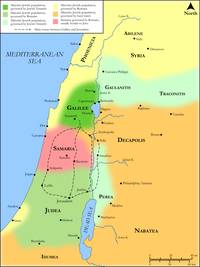 The Roads from Galilee to Jerusalem