and And, even, also, namely. καί, conj., and. Copulative. Connecting single words; in general: Mt 2:18 16:1, Mk 2:15, Lk 8:15, He 1:1, al. mult.; repeated before each of the terms in a series, Mt 23:23, Lk 14:21, Ro 7:12 9:4, al.; connecting numerals (WM, § 37, 4): Jo 2:20, Ac 13:20; joining terms which are not mutually exclusive, as the part with the whole: Mt 8:33 26:59, Mk 16:17, Ac 5:29, al. Connecting clauses and sentences: Mt 3:12, Ac 5:21, al. mult.; esp. where, after the simplicity of the popular language, sentences are paratactically joined (WM, § 60, 3; M, Pr., 12; Deiss., LAE, 128 ff.): Mt 1:21 7:25, Mk 9:5, Jo 10:3, al.; joining affirmative to negative sentences: Lk 3:14, Jo 4:11, III Jo 10; consecutive, and so: Mt 5:15 23:32, He 3:19, al.; after imperatives, Mt 4:19, Lk 7:7, al.; = καίτοι, and yet: Mt 3:14 6:26, Mk 12:12, Lk 18:7 (Field, Notes, 72), I Co 5:2, al.; beginning an apodosis (= Heb. וְ; so sometimes δέ in cl.), then: Lk 2:21 7:12, Ac 1:10; beginning a question (WM, § 53, 3a): Mk 10:26, Lk 10:29, Jo 9:36. Epexegetic, and, and indeed, namely (WM, § 53, 3c): Lk 3:18, Jo 1:16, Ac 23:6, Ro 1:5, I Co 3:5, al. In transition: Mt 4:23, Mk 5:1, 21, Jo 1:19, al.; so, Hebraistically, καὶ ἐγένετο ( וַיְהִי; also ἐγένετο δέ ), Mk 1:9 (cf. Lk 5:1; V. Burton, §§ 357-60; M, Pr., 14, 16). καὶ... καί, both... and (for τε... καί, v.s. τε ); connecting single words: Mt 10:28, Mk 4:41, Ro 11:33, al.; clauses and sentences: Mk 9:13, Jo 7:28, I Co 1:22, al. Adjunctive, also, even, still: Mt 5:39, 40, Mk 2:28, al. mult.; esp. c. pron., adv., etc., Mt 20:4, Jo 7:47, al; ὡς κ., Ac 11:17; καθὼς κ., Ro 15:7; οὕτω κ., Ro 6:11; διὸ κ., Lk 1:35; ὁ κ. (Deiss., BS, 313ff.), Ac 13:9; pleonastically, μετὰ κ.. (Bl., §77, 7; Deiss., BS, 265 f,), Phl 4:3; τί κ., 1 Co 15:29; ἀλλὰ κ., Lk 14:22, Jo 5:18, al.; καίγε (M, Pr., 230; Burton, § 437), Ac 17:27; καίπερ, He 5:8; κ. ἐάν, v.s. ἐάν. Scroll for more
not any more No longer, no more. οὐκέτι, neg. adv. of time, [in LXX chiefly for עוֹד c. neg., לֹא, etc.;] no longer, no more: Mt 19:6, Mk 10:8, Lk 15:19, Jo 4:42, Ro 6:9, Ga 3:25, Eph 2:19, He 10:18, al.; c. neg. (to strengthen the negation), Mt 22:46, Mk 5:3, Ac 8:39, al. Scroll for more
to be I am, exist. εἰμί, with various uses and significations, like the English verb to be. As substantive verb. Of persons and things, to be, exist: Ac 17:28, Jo 1:1 8:58 17:5, al; ὁ ὢν καὶ ὁ ἦν (for past ptcp.), Re 1:4, 8 4:8 11:17 16:5 (v. Swete, Ap., 5; M, Pr., 228); τὰ (μὴ) ὄντα, Ro 4:17, I Co 1:28. Of times, events, etc., to be, happen, take place: Mt 24:3, Mk 14:2 15:42, Lk 21:23, Jo 4:6, 23 5:10, al. to be present, be in a place, have come: Mt 2:13, 15, Mk 1:45 5:21 15:40, Lk 1:80 5:29, Jo 7:30, al.; seq. εἰς, Mk 2:1; seq. ἐκ, (ἐξ), Mt 1:20 21:25, Mk 11:30, Jo 3:31, al. Impers., ἔστι, ἦν, etc.; there is (Fr. il y a ), was, etc.: Mt 16:28, Lk 16:19, Jo 3:1 5:2, Ro 3:10, al.; c. dat. (of the possessor; Bl., §37, 3), Mt 16:22, Lk 1:7, Jo 18.10, Ro 9:2, al.; ἔστιν ὅς, ὅστις (chiefly in pl), Mt 16:28 19:2, Mk 9:1, al.; c. inf., = ἔξεστιν (q.v.), it is possible: He 9:5, I Co 11:20, RV (but v. ICC, in l.). As copula uniting subject and predicate. Expressing simply identity or equivalence: Mt 5:13 14:15, Lk 1:18, 19, Jo 1:1 4:19, Re 3:9, al. mult. Explicative, as in parable, figure, type, etc.: Mt 13:19, I Co 9:2, 10:4, 11:25, Ga 4:24, Re 17:15, al.; τοῦτ’ ἔστιν, Mt 27:46, Mk 7:2, Ro 7:18 al.; ὅ ἐστιν, Mk 3:17, Col 1:24, He 7:2, al.; akin to this is the sacramental usage: Mt 26:26-28, Mk 14:22, 24, Lk 22:19, I Co 11:24 (v. ICC on Mk, I Co, ll. c.; DB, iii, 148 f.). C. gen.: qual., etc., Mk 5:42, Lk 3:23, I Co 14:33, He 12:11, al.; part., I Ti 1:20, II Ti 1:15; poss., Mt 5:3, 10, Mk 12:7, Lk 4:7; of service or partisanship, Ro 8:9, I Co 1:12, II Co 10:7, II Ti 2:19. C. dat. (BL, §37, 3): Ac 1:8 9:15, Ro 4:12, I Co 1:18 2:14, Re 21:7, al. C. ptcp., as a periphrasis for the simple verb (Bl., §62, 1, 2; M, Pr., 225 ff.); c. ptcp. pf. (cl.): Mt 10:30, Lk 9:32, Jo 3:24, Ac 21:35, I Co 15:19, al; c. ptcp. pr. (esp. in impf., as in Heb. and Aram.; Dalman, Words, 35 f.), Mt 7:29, Mk 1:22, Lk 4:31 14:1, Ac 1:10, al. mult., id. for imper. (M, Pr., 180f., 182f.), with ellipsis of εἰμί, Ro 12:9, 10, He 13:5, al.; c. ptcp. aor. (cl), Lk 23:9. Seq. εἰς (cf. Heb. הָיָה לְ ), a vernac. usage (M, Pr., 71): Mt 19:5, Mk 10:8, He 8:10, al. C. adv.: Mt 19:20, Mk 4:26, Lk 18:11, al. Ellipses; of the copula (Bl., §30, 3): Mt 8:29 24:32, Jo 21:22, 23, He 6:4, al.; of the predicate: ἐγώ εἰμί, Mt 14:27, Mk 6:50, al.; absol. (cf. De 32:39; אֲנִי הוּא ), Mk 13:6, Jo 4:26, al. (cf. ἄπ-, ἔν-, πάρ-, συμ-πάρ-, σύν-ειμι ). Scroll for more
in/on/among In, on, among. ἐν, prep, (the most freq. of all in NT), c. dat. (= Heb. בְּ, Lat. in, c. abl.). Of place, c. dat. rei, pers., in, within, on, at, by, among: ἐν τ. πόλει, Lk 7:37; τ. οφθαλμῷ, Mt 7:3; τ. κοιλίᾳ, Mt 12:40; τ. ὄρει, II Pe 1:18; τ. θρόνῳ, Re 3:21; τ. δεξιᾷ τ. θεοῦ, Ro 8:34; ἐν ἡμῖν Abbott-Smith has ὑμῖν., Lk 1:1; of books, ἐν τ. βιβλίῳ, Ga 3:10; τ. νόμῳ, Mt 12:5, al.; ἐν τοῖς τ. Πατρός, in my Father's house (RV; cf. M, Pr., 103), Lk 2:49; trop., of the region of thought or feeling, ἐν τ. καρδίᾳ (-αις), Mt 5:28, II Co 4:6, al.; τ. συνειδήσεσιν, II Co 5:11; after verbs of motion, instead of εἰς ( constructio praegnans, a usage extended in late Gk. beyond the limits observed in cl.; cf. Bl., §41, 1; M, Th., 12), ἀποστέλλω... ἐν, Mt 10:16. δέδωκεν ἐν τ. χειρί (cf. τιθέναι ἐν χερσί, Hom., Il., i, 441, al.), Jo 3:35; id. after verbs of coming and going (not in cl.), εἰσῆλθε, Lk 9:46; ἐξῆλθεν, Lk 7:17. Of state, condition, form, occupation, etc.: ἐν ζωῇ, Ro 5:10; ἐν τ. θανάτῳ, I Jo 3:14; ἐν πειρασμοῖς, I Pe 1:6; ἐν εἰρήνῃ, Mk 5:25; ἐν δόξῃ, Phl 4:19; ἐν πραΰτητι, Ja 3:13; ἐν μυστηρίῳ, I Co 2:7; ἐν τ. διδαχῇ, Mk 4:2; of a part as contained in a whole, ἐν τ. ἀμπέλῳ, Jo 15:4; ἐν ἑνὶ σώματι, Ro 12:4; of accompanying objects or persons (simple dat. in cl.), with, ἐν αἵματι, He 9:25; ἐν δέκα χιλιάσιν, Lk 14:31 (cf. Ju 14, Ac 7:14 ); similarly (cl.), of clothing, armour, arms, ἐν στολαῖς, Mk 12:38; ἐν ἐσθῆτι λαμπρᾷ, Ja 2:2; ἐν μαξαίρῃ, Lk 22:49; ἐν ῥάβδῳ, I Co 4:21 (cf. ἐν τόξοις, Xen., Mem., 3, 9, 2); of manner (cl.), ἐν τάχει (= ταχέως ), Lk 18:8 (cf. Bl., §41, 1); of spiritual influence, ἐν πνεύματι, Ro 8:9; ἐν π. ἀκαθάρτῳ, Mk 1:23; of the mystical relation of the Christian life and the believer himself, to God and Christ (cf. ICC, Ro., 160f.; Mayor on Ju 1; M, Pr., 103): ἐν Χριστῷ, Ro 3:24, 6:11, I Co 3:1, 4:10, II Co 12:2, Ga 2:17, Eph 6:21, Col 4:7, I Th 4:16, al. Of the agent, instrument or means (an extension of cl. ἐν of instr.—v. LS, s.v. Ill—corresponding to similar use of Heb. בְּ ), by, with: ἐν ὑμῖν κρίνεται ὁ κόσμος (= cl. παρά, C. dat.), I Co 6:2; ἐν τ. ἄρχοντι τ. δαιμονίων, Mt 9:34; ἐν αἵματι, He 9:22; ἐν ὕδατι, Mt 3:11, al.; ἐν μαχαίρᾳ ἀποκτενεῖ (cf. the absol. ἐν μ., ἐν ῥάβδῳ, supr., II, which some would classify here), Re 13:10 (cf. 6:8 ). Allied to this usage and distinctly Semitic are the following: ἠγόρασας... ἐν τ. αἵματι σου (cf. BDB, s.v. בְּ, III, 3), Re 5:9; ὁμολογεῖν ἐν (= Aram. אודי בּ; cf. McNeile on Mt, I.c.; M, Pr., 104), Mt 10:32, Lk 12:8; ὀμνύναι ἐν (= cl. acc., so Ja 5:12 ), Mt 5:34, al.; also at the rate of, amounting to, Mk 4:8 (WH; vv. ll., εἰς, ἒν ), Ac 7:14 (LXX). Of time, in or during a period: ἐν τ. ἡμέρᾳ (νυκτί), Jo 11:9, al.; ἐν σαββάτῳ, Mt 12:2, al.; ἐν τῷ μεταξύ, meanwhile, Jo 4:31; at the time of an event: ἐν τ. παρουσίᾳ, I Co 15:23; ἐν τ. ἀναστάσει, Mt 22:28; c. art. inf., pres. (so sometimes in cl., but not as in NT = ἕως; V. M, Pr., 215), while: Mt 13:4, Mk 6:48, Ga 4:18, al.; aor., when, after: Lk 9:36, al.; within (cl.): Mt 27:40, In composition: (1) meaning: (a) with adjectives, it signifies usually the possession of a quality, as ἐνάλιος, ἐν́δοξος; (b) with verbs, continuance in (seq. ἐν ) or motion into (seq. εἰς ), as ἐμμένω, ἐμβαίνω. (ii) Assimilation: ἐν becomes ἐμ- before β, μ, π, φ, ψ; ἐγ- before γ, κ, ξ, χ; ἐλ- before λ. But in the older MSS of NT, followed by modern editions, assimilation is sometimes neglected, as in ἐνγράφω, ἐγκαινίζω, etc. Scroll for more
the/this/who The, the definite article. ὁ, ἡ, τό, the prepositive article ( ἄρθρον προτακτικόν ), originally a demonstr. pron. (so usually in Hom.), in general corresponding to the Eng. definite article. As demonstr. pron. As freq. in Hom., absol., he ( she, it ), his (etc.): Ac 17:28 (quoted from the poet Aratus). Distributive, ὁ μὲν... ὁ δέ, the one... the other: I Co 7:7, Ga 4:22; pl., Ac 14:4, 17:32, Phl 1:16, al.; οἱ μὲν... ἄλλοι δέ, Mt 16:14, Jo 7:12; οἱ μεν̀... ὁ δέ, He 7:21, 23. In narration (without ὁ μὲν preceding), ὁ δέ, but he: Mt 2:14, Mk 1:45, Lk 8:21, Jo 9:38, al. mult. As prepositive article, the, prefixed, to nouns unmodified: ὁ θεός, τὸ φῶς, etc.; to abstract nouns, ἡ σοφία, etc., to pl. nouns which indicate a class, οἱ ἀλώπεκες, foxes, Mt 8:20, al.; to an individual as representing a class, ὁ ἐργάτης, Lk 10:7; c. nom. = voc. in addresses, Mt 11:26, Jo 19:3, Ja 5:1, al.; to things which pertain to one, ἡ χεῖρ, his hand, Mk 3:1; to names of persons well known or already mentioned; usually to names of countries (originally adjectives), ἡ Ἰουδαία, etc. To modified nouns: c. pers. pron. gen., μοῦ, σοῦ, etc.; c. poss. pron., ἐμός, σός, etc.; c. adj. between the art. and the noun, ὁ ἀγαθὸς ἄνθρωπος, Mt 12:35; the noun foll. by adj., both c. art., ὁ ποιμὴν ὁ καλός, Jo 10:11 (on ὁ ὄχλος πολύς, Jo 12:9, v. M, Pr., 84); before adjectival phrases, ἡ κατ’ ἐκλογὴν πρόθεσις, Ro 9:11. To Other parts of speech used as substantives; neuter adjectives: τ. ἀγαθόν, etc.; cardinal numerals: ὁ εἶς, οἷ δύο, etc.; participles: ὁ βαπτίζων (= ὁ Βαπτιστής, Mt 14:2 ), Mk 6:14; πᾶς ὁ, c. ptcp., every one who, etc.; adverbs: τὸ πέραν, τὰ νῦν, ὁ ἔσω ἄνθρωπος; infinitives: nom., τὸ θέλειν, Ro 7:18, al.; gen., τοῦ, after adjectives, ἄξιον τοῦ πορεύεσθαι, I Co 16:4; verbs, ἔλαχεν τοῦ θυμιᾶσαι, Lk 1:9; and freq. in a final sense, ἐξῆλθεν ὁ σπείρειν, Mt 13:3 (on the artic. inf., v. Bl., § 71). In the neut. to sentences, phrases or single words treated as a quotation: τὸ Ἐι δύνῃ, Mk 9:23; τὸ ἔτι ἅπαξ, He 12:27; τὸ ἀνέβη, Eph 4:9, al. To prepositional phrases: οἱ ἀπὸ Ἰταλίας, He 13:24; οἱ ἐκ νόμου, Ro 4:14; neut. acc. absol., in adverbial phrases, τὸ καθ’ ἡμέραν, daily, Lk 11:3; τὸ κατὰ σάρκα, as regards the flesh, Ro 9:5. To nouns in the genitive, denoting kinship, association, etc.: ὁ τοῦ, the son of (unless context indicates a different relationship), Mt 10:2, al.; τὰ τοῦ θεοῦ, the things that pertain to God, Mt 16:23; τὰ τῆς εἰρήνης, Ro 14:19 (cf. M, Pr., 81 ff.; Bl, §§ 46, 47). Scroll for more
world The world, universe; worldly affairs; the inhabitants of the world; adornment. κόσμος, -ου, ὁ [in LXX: Ge 2:1, De 4:19 17:3, Is 24:21 40:26 ( צבא ), Ex 33:5, 6, Je 2:32 4:30, Ez 7:20 16:11 23:40 ( עֲדִי ), Is 61:10 ( כְּלִי ), al., Wi 2:24 and freq., Si 6:30, al;] order (Hom., Plat., al.). ornament, adornment, esp. of women (Hom., al.): I Pe 3:3. Later, the world or universe, as an ordered system (Plat., al.): Ac 17:24, Ro 4:13, I Co 3:22, Phl 2:15, He 4:3, al. In late writers only, the world, i.e. the earth (= ἡ οἰκουμένη, cf. Mt 4:8 with Lk 4:5 ): Mt 4:8, Mk 16:[15], Col 2:20, I Ti 6:7, al.; hence by meton., of the human inhabitants of the world: Mt 5:14 13:38, Mk 14:9, Jo 1:10 4:42 12:47, Ro 3:6, I Co 4:13, II Co 5:19, II Pe 2:5, al.; of worldly affairs or possessions: Mt 16:26, Mk 8:36, Lk 9:25, I Co 7:31, I Jo 2:16, al.; in ethical sense, of the ungodly: Jo 7:7 14:17, 27, I Co 1:21, Ja 1:27, I Jo 4:4, al.; metaph.: ὁ κ. τῆς ἀδικίας, Ja 3:6. SYN.: αἰών, q.v. (cf. also Dalman, Words, 162 ff.; Tr., Syn., § lix; Westc., additional note on Jo 1:10; DB, iv, 938 ff.). Scroll for more
and And, even, also, namely. καί, conj., and. Copulative. Connecting single words; in general: Mt 2:18 16:1, Mk 2:15, Lk 8:15, He 1:1, al. mult.; repeated before each of the terms in a series, Mt 23:23, Lk 14:21, Ro 7:12 9:4, al.; connecting numerals (WM, § 37, 4): Jo 2:20, Ac 13:20; joining terms which are not mutually exclusive, as the part with the whole: Mt 8:33 26:59, Mk 16:17, Ac 5:29, al. Connecting clauses and sentences: Mt 3:12, Ac 5:21, al. mult.; esp. where, after the simplicity of the popular language, sentences are paratactically joined (WM, § 60, 3; M, Pr., 12; Deiss., LAE, 128 ff.): Mt 1:21 7:25, Mk 9:5, Jo 10:3, al.; joining affirmative to negative sentences: Lk 3:14, Jo 4:11, III Jo 10; consecutive, and so: Mt 5:15 23:32, He 3:19, al.; after imperatives, Mt 4:19, Lk 7:7, al.; = καίτοι, and yet: Mt 3:14 6:26, Mk 12:12, Lk 18:7 (Field, Notes, 72), I Co 5:2, al.; beginning an apodosis (= Heb. וְ; so sometimes δέ in cl.), then: Lk 2:21 7:12, Ac 1:10; beginning a question (WM, § 53, 3a): Mk 10:26, Lk 10:29, Jo 9:36. Epexegetic, and, and indeed, namely (WM, § 53, 3c): Lk 3:18, Jo 1:16, Ac 23:6, Ro 1:5, I Co 3:5, al. In transition: Mt 4:23, Mk 5:1, 21, Jo 1:19, al.; so, Hebraistically, καὶ ἐγένετο ( וַיְהִי; also ἐγένετο δέ ), Mk 1:9 (cf. Lk 5:1; V. Burton, §§ 357-60; M, Pr., 14, 16). καὶ... καί, both... and (for τε... καί, v.s. τε ); connecting single words: Mt 10:28, Mk 4:41, Ro 11:33, al.; clauses and sentences: Mk 9:13, Jo 7:28, I Co 1:22, al. Adjunctive, also, even, still: Mt 5:39, 40, Mk 2:28, al. mult.; esp. c. pron., adv., etc., Mt 20:4, Jo 7:47, al; ὡς κ., Ac 11:17; καθὼς κ., Ro 15:7; οὕτω κ., Ro 6:11; διὸ κ., Lk 1:35; ὁ κ. (Deiss., BS, 313ff.), Ac 13:9; pleonastically, μετὰ κ.. (Bl., §77, 7; Deiss., BS, 265 f,), Phl 4:3; τί κ., 1 Co 15:29; ἀλλὰ κ., Lk 14:22, Jo 5:18, al.; καίγε (M, Pr., 230; Burton, § 437), Ac 17:27; καίπερ, He 5:8; κ. ἐάν, v.s. ἐάν. Scroll for more
this/he/she/it This; he, she, it. οὗτος, αὕτη, τοῦτο, gen., τούτου, ταύτης, τούτου, [in LXX chiefly for זֶה, זֹאת;] demonstr. pron. (related to ἐκεῖνος as hic to ille ), this; as subst., this one, he; absol.: Mt 3:17, Mk 9:7, Lk 7:44, 45, Jo 1:15, Ac 2:15, al.; expressing contempt (cl.), Mt 13:55, 56, Mk 6:2, 3, Jo 6:42, al.; εἰς τοῦτο, Mk 1:38, Ro 14:9; μετὰ τοῦτο ( ταῦτα; V. Westc. on Jo 5:1 ), Jo 2:12 11:7, al.; epanaleptic (referring to what precedes): Mt 5:19, Mk 3:35, Lk 9:48, Jo 6:46, Ro 7:10, al.; proleptic (referring to what follows): seq. ἵνα (Bl., § 69, 6), Lk 1:43, Jo 3:19 (and freq.) 15:8, Ro 14:9, al.; seq. ὅτι, Lk 10:11, Jo 9:30, Ac 24:14, Ro 2:3, al.; ὅπως, Ro 9:17; ἐάν, Jo 13:35; special idioms: τοῦτο μὲν... τ. δέ (cl), partly... partly, He 10:33; καὶ τοῦτο ( τοῦτον, ταῦτα ), and that ( him ) too, Ro 13:11, I Co 2:2, He 11:12; τοῦτ’ ἐστιν, that is to say, Mt 27:46. As adj., c. subst.; c. art. before the art.: Mt 12:32, Mk 9:29, Lk 7:44, Jo 4:15, Ro 11:24, Re 19:9, al.; after the noun: Mt 3:9, Mk 12:16, Lk 11:31, Jo 4:13, Ac 6:13, Ro 15:28, I Co 1:20, Re 2:24, al.; c. subst. anarth. (with predicative force; Bl., § 49, 4): Lk 1:36 2:2 24:21, Jo 2:11 4:54 21:14, II Co 13:1. Scroll for more
in/on/among In, on, among. ἐν, prep, (the most freq. of all in NT), c. dat. (= Heb. בְּ, Lat. in, c. abl.). Of place, c. dat. rei, pers., in, within, on, at, by, among: ἐν τ. πόλει, Lk 7:37; τ. οφθαλμῷ, Mt 7:3; τ. κοιλίᾳ, Mt 12:40; τ. ὄρει, II Pe 1:18; τ. θρόνῳ, Re 3:21; τ. δεξιᾷ τ. θεοῦ, Ro 8:34; ἐν ἡμῖν Abbott-Smith has ὑμῖν., Lk 1:1; of books, ἐν τ. βιβλίῳ, Ga 3:10; τ. νόμῳ, Mt 12:5, al.; ἐν τοῖς τ. Πατρός, in my Father's house (RV; cf. M, Pr., 103), Lk 2:49; trop., of the region of thought or feeling, ἐν τ. καρδίᾳ (-αις), Mt 5:28, II Co 4:6, al.; τ. συνειδήσεσιν, II Co 5:11; after verbs of motion, instead of εἰς ( constructio praegnans, a usage extended in late Gk. beyond the limits observed in cl.; cf. Bl., §41, 1; M, Th., 12), ἀποστέλλω... ἐν, Mt 10:16. δέδωκεν ἐν τ. χειρί (cf. τιθέναι ἐν χερσί, Hom., Il., i, 441, al.), Jo 3:35; id. after verbs of coming and going (not in cl.), εἰσῆλθε, Lk 9:46; ἐξῆλθεν, Lk 7:17. Of state, condition, form, occupation, etc.: ἐν ζωῇ, Ro 5:10; ἐν τ. θανάτῳ, I Jo 3:14; ἐν πειρασμοῖς, I Pe 1:6; ἐν εἰρήνῃ, Mk 5:25; ἐν δόξῃ, Phl 4:19; ἐν πραΰτητι, Ja 3:13; ἐν μυστηρίῳ, I Co 2:7; ἐν τ. διδαχῇ, Mk 4:2; of a part as contained in a whole, ἐν τ. ἀμπέλῳ, Jo 15:4; ἐν ἑνὶ σώματι, Ro 12:4; of accompanying objects or persons (simple dat. in cl.), with, ἐν αἵματι, He 9:25; ἐν δέκα χιλιάσιν, Lk 14:31 (cf. Ju 14, Ac 7:14 ); similarly (cl.), of clothing, armour, arms, ἐν στολαῖς, Mk 12:38; ἐν ἐσθῆτι λαμπρᾷ, Ja 2:2; ἐν μαξαίρῃ, Lk 22:49; ἐν ῥάβδῳ, I Co 4:21 (cf. ἐν τόξοις, Xen., Mem., 3, 9, 2); of manner (cl.), ἐν τάχει (= ταχέως ), Lk 18:8 (cf. Bl., §41, 1); of spiritual influence, ἐν πνεύματι, Ro 8:9; ἐν π. ἀκαθάρτῳ, Mk 1:23; of the mystical relation of the Christian life and the believer himself, to God and Christ (cf. ICC, Ro., 160f.; Mayor on Ju 1; M, Pr., 103): ἐν Χριστῷ, Ro 3:24, 6:11, I Co 3:1, 4:10, II Co 12:2, Ga 2:17, Eph 6:21, Col 4:7, I Th 4:16, al. Of the agent, instrument or means (an extension of cl. ἐν of instr.—v. LS, s.v. Ill—corresponding to similar use of Heb. בְּ ), by, with: ἐν ὑμῖν κρίνεται ὁ κόσμος (= cl. παρά, C. dat.), I Co 6:2; ἐν τ. ἄρχοντι τ. δαιμονίων, Mt 9:34; ἐν αἵματι, He 9:22; ἐν ὕδατι, Mt 3:11, al.; ἐν μαχαίρᾳ ἀποκτενεῖ (cf. the absol. ἐν μ., ἐν ῥάβδῳ, supr., II, which some would classify here), Re 13:10 (cf. 6:8 ). Allied to this usage and distinctly Semitic are the following: ἠγόρασας... ἐν τ. αἵματι σου (cf. BDB, s.v. בְּ, III, 3), Re 5:9; ὁμολογεῖν ἐν (= Aram. אודי בּ; cf. McNeile on Mt, I.c.; M, Pr., 104), Mt 10:32, Lk 12:8; ὀμνύναι ἐν (= cl. acc., so Ja 5:12 ), Mt 5:34, al.; also at the rate of, amounting to, Mk 4:8 (WH; vv. ll., εἰς, ἒν ), Ac 7:14 (LXX). Of time, in or during a period: ἐν τ. ἡμέρᾳ (νυκτί), Jo 11:9, al.; ἐν σαββάτῳ, Mt 12:2, al.; ἐν τῷ μεταξύ, meanwhile, Jo 4:31; at the time of an event: ἐν τ. παρουσίᾳ, I Co 15:23; ἐν τ. ἀναστάσει, Mt 22:28; c. art. inf., pres. (so sometimes in cl., but not as in NT = ἕως; V. M, Pr., 215), while: Mt 13:4, Mk 6:48, Ga 4:18, al.; aor., when, after: Lk 9:36, al.; within (cl.): Mt 27:40, In composition: (1) meaning: (a) with adjectives, it signifies usually the possession of a quality, as ἐνάλιος, ἐν́δοξος; (b) with verbs, continuance in (seq. ἐν ) or motion into (seq. εἰς ), as ἐμμένω, ἐμβαίνω. (ii) Assimilation: ἐν becomes ἐμ- before β, μ, π, φ, ψ; ἐγ- before γ, κ, ξ, χ; ἐλ- before λ. But in the older MSS of NT, followed by modern editions, assimilation is sometimes neglected, as in ἐνγράφω, ἐγκαινίζω, etc. Scroll for more
the/this/who The, the definite article. ὁ, ἡ, τό, the prepositive article ( ἄρθρον προτακτικόν ), originally a demonstr. pron. (so usually in Hom.), in general corresponding to the Eng. definite article. As demonstr. pron. As freq. in Hom., absol., he ( she, it ), his (etc.): Ac 17:28 (quoted from the poet Aratus). Distributive, ὁ μὲν... ὁ δέ, the one... the other: I Co 7:7, Ga 4:22; pl., Ac 14:4, 17:32, Phl 1:16, al.; οἱ μὲν... ἄλλοι δέ, Mt 16:14, Jo 7:12; οἱ μεν̀... ὁ δέ, He 7:21, 23. In narration (without ὁ μὲν preceding), ὁ δέ, but he: Mt 2:14, Mk 1:45, Lk 8:21, Jo 9:38, al. mult. As prepositive article, the, prefixed, to nouns unmodified: ὁ θεός, τὸ φῶς, etc.; to abstract nouns, ἡ σοφία, etc., to pl. nouns which indicate a class, οἱ ἀλώπεκες, foxes, Mt 8:20, al.; to an individual as representing a class, ὁ ἐργάτης, Lk 10:7; c. nom. = voc. in addresses, Mt 11:26, Jo 19:3, Ja 5:1, al.; to things which pertain to one, ἡ χεῖρ, his hand, Mk 3:1; to names of persons well known or already mentioned; usually to names of countries (originally adjectives), ἡ Ἰουδαία, etc. To modified nouns: c. pers. pron. gen., μοῦ, σοῦ, etc.; c. poss. pron., ἐμός, σός, etc.; c. adj. between the art. and the noun, ὁ ἀγαθὸς ἄνθρωπος, Mt 12:35; the noun foll. by adj., both c. art., ὁ ποιμὴν ὁ καλός, Jo 10:11 (on ὁ ὄχλος πολύς, Jo 12:9, v. M, Pr., 84); before adjectival phrases, ἡ κατ’ ἐκλογὴν πρόθεσις, Ro 9:11. To Other parts of speech used as substantives; neuter adjectives: τ. ἀγαθόν, etc.; cardinal numerals: ὁ εἶς, οἷ δύο, etc.; participles: ὁ βαπτίζων (= ὁ Βαπτιστής, Mt 14:2 ), Mk 6:14; πᾶς ὁ, c. ptcp., every one who, etc.; adverbs: τὸ πέραν, τὰ νῦν, ὁ ἔσω ἄνθρωπος; infinitives: nom., τὸ θέλειν, Ro 7:18, al.; gen., τοῦ, after adjectives, ἄξιον τοῦ πορεύεσθαι, I Co 16:4; verbs, ἔλαχεν τοῦ θυμιᾶσαι, Lk 1:9; and freq. in a final sense, ἐξῆλθεν ὁ σπείρειν, Mt 13:3 (on the artic. inf., v. Bl., § 71). In the neut. to sentences, phrases or single words treated as a quotation: τὸ Ἐι δύνῃ, Mk 9:23; τὸ ἔτι ἅπαξ, He 12:27; τὸ ἀνέβη, Eph 4:9, al. To prepositional phrases: οἱ ἀπὸ Ἰταλίας, He 13:24; οἱ ἐκ νόμου, Ro 4:14; neut. acc. absol., in adverbial phrases, τὸ καθ’ ἡμέραν, daily, Lk 11:3; τὸ κατὰ σάρκα, as regards the flesh, Ro 9:5. To nouns in the genitive, denoting kinship, association, etc.: ὁ τοῦ, the son of (unless context indicates a different relationship), Mt 10:2, al.; τὰ τοῦ θεοῦ, the things that pertain to God, Mt 16:23; τὰ τῆς εἰρήνης, Ro 14:19 (cf. M, Pr., 81 ff.; Bl, §§ 46, 47). Scroll for more
world The world, universe; worldly affairs; the inhabitants of the world; adornment. κόσμος, -ου, ὁ [in LXX: Ge 2:1, De 4:19 17:3, Is 24:21 40:26 ( צבא ), Ex 33:5, 6, Je 2:32 4:30, Ez 7:20 16:11 23:40 ( עֲדִי ), Is 61:10 ( כְּלִי ), al., Wi 2:24 and freq., Si 6:30, al;] order (Hom., Plat., al.). ornament, adornment, esp. of women (Hom., al.): I Pe 3:3. Later, the world or universe, as an ordered system (Plat., al.): Ac 17:24, Ro 4:13, I Co 3:22, Phl 2:15, He 4:3, al. In late writers only, the world, i.e. the earth (= ἡ οἰκουμένη, cf. Mt 4:8 with Lk 4:5 ): Mt 4:8, Mk 16:[15], Col 2:20, I Ti 6:7, al.; hence by meton., of the human inhabitants of the world: Mt 5:14 13:38, Mk 14:9, Jo 1:10 4:42 12:47, Ro 3:6, I Co 4:13, II Co 5:19, II Pe 2:5, al.; of worldly affairs or possessions: Mt 16:26, Mk 8:36, Lk 9:25, I Co 7:31, I Jo 2:16, al.; in ethical sense, of the ungodly: Jo 7:7 14:17, 27, I Co 1:21, Ja 1:27, I Jo 4:4, al.; metaph.: ὁ κ. τῆς ἀδικίας, Ja 3:6. SYN.: αἰών, q.v. (cf. also Dalman, Words, 162 ff.; Tr., Syn., § lix; Westc., additional note on Jo 1:10; DB, iv, 938 ff.). Scroll for more
they are εἰμί, with various uses and significations, like the English verb to be. As substantive verb. Of persons and things, to be, exist: Ac 17:28, Jo 1:1 8:58 17:5, al; ὁ ὢν καὶ ὁ ἦν (for past ptcp.), Re 1:4, 8 4:8 11:17 16:5 (v. Swete, Ap., 5; M, Pr., 228); τὰ (μὴ) ὄντα, Ro 4:17, I Co 1:28. Of times, events, etc., to be, happen, take place: Mt 24:3, Mk 14:2 15:42, Lk 21:23, Jo 4:6, 23 5:10, al. to be present, be in a place, have come: Mt 2:13, 15, Mk 1:45 5:21 15:40, Lk 1:80 5:29, Jo 7:30, al.; seq. εἰς, Mk 2:1; seq. ἐκ, (ἐξ), Mt 1:20 21:25, Mk 11:30, Jo 3:31, al. Impers., ἔστι, ἦν, etc.; there is (Fr. il y a ), was, etc.: Mt 16:28, Lk 16:19, Jo 3:1 5:2, Ro 3:10, al.; c. dat. (of the possessor; Bl., §37, 3), Mt 16:22, Lk 1:7, Jo 18.10, Ro 9:2, al.; ἔστιν ὅς, ὅστις (chiefly in pl), Mt 16:28 19:2, Mk 9:1, al.; c. inf., = ἔξεστιν (q.v.), it is possible: He 9:5, I Co 11:20, RV (but v. ICC, in l.). As copula uniting subject and predicate. Expressing simply identity or equivalence: Mt 5:13 14:15, Lk 1:18, 19, Jo 1:1 4:19, Re 3:9, al. mult. Explicative, as in parable, figure, type, etc.: Mt 13:19, I Co 9:2, 10:4, 11:25, Ga 4:24, Re 17:15, al.; τοῦτ’ ἔστιν, Mt 27:46, Mk 7:2, Ro 7:18 al.; ὅ ἐστιν, Mk 3:17, Col 1:24, He 7:2, al.; akin to this is the sacramental usage: Mt 26:26-28, Mk 14:22, 24, Lk 22:19, I Co 11:24 (v. ICC on Mk, I Co, ll. c.; DB, iii, 148 f.). C. gen.: qual., etc., Mk 5:42, Lk 3:23, I Co 14:33, He 12:11, al.; part., I Ti 1:20, II Ti 1:15; poss., Mt 5:3, 10, Mk 12:7, Lk 4:7; of service or partisanship, Ro 8:9, I Co 1:12, II Co 10:7, II Ti 2:19. C. dat. (BL, §37, 3): Ac 1:8 9:15, Ro 4:12, I Co 1:18 2:14, Re 21:7, al. C. ptcp., as a periphrasis for the simple verb (Bl., §62, 1, 2; M, Pr., 225 ff.); c. ptcp. pf. (cl.): Mt 10:30, Lk 9:32, Jo 3:24, Ac 21:35, I Co 15:19, al; c. ptcp. pr. (esp. in impf., as in Heb. and Aram.; Dalman, Words, 35 f.), Mt 7:29, Mk 1:22, Lk 4:31 14:1, Ac 1:10, al. mult., id. for imper. (M, Pr., 180f., 182f.), with ellipsis of εἰμί, Ro 12:9, 10, He 13:5, al.; c. ptcp. aor. (cl), Lk 23:9. Seq. εἰς (cf. Heb. הָיָה לְ ), a vernac. usage (M, Pr., 71): Mt 19:5, Mk 10:8, He 8:10, al. C. adv.: Mt 19:20, Mk 4:26, Lk 18:11, al. Ellipses; of the copula (Bl., §30, 3): Mt 8:29 24:32, Jo 21:22, 23, He 6:4, al.; of the predicate: ἐγώ εἰμί, Mt 14:27, Mk 6:50, al.; absol. (cf. De 32:39; אֲנִי הוּא ), Mk 13:6, Jo 4:26, al. (cf. ἄπ-, ἔν-, πάρ-, συμ-πάρ-, σύν-ειμι ). Scroll for more
and I I also, I too, but I. κἀγώ v.s. ἐγώ. Scroll for more
to/with To, towards, with. πρός, prep. c. gen., dat., acc. C. gen., of motion from a place, from the side of, hence metaph., in the interests of, Ac 27:34 (cf. Page, in l.). C. dat., of local proximity, hard by, near, at: Mk 5:11, Lk 19:37, Jo 18:16 20:11, 12, Re 1:13. C. acc., of motion or direction towards a place or object, to, towards. Of place, after verbs of motion or of speaking and other words with the idea of direction: ἔρχομαι, ἀναβαίνω, πορεύομαι, λέγω, ἐπιστολή, etc., Mt 3:14, Mk 6:51, Lk 11:5, Jo 2:3, Ac 9:2, al. mult.; metaph., of mental direction, hostile or otherwise, Lk 23:12, Jo 6:52, II Co 7:4, Eph 6:12, Col 3:13, al.; of the issue or end, Lk 14:32, Jo 11:4, al.; of purpose, Mt 26:12, Ro 3:26, I Co 6:5, al.; πρὸς τό, c. inf., denoting purpose (cf. M, Pr., 218, 220; Lft., Notes, 131), Mt 5:28, Mk 13:22, Eph 6:11, I Th 2:9, al.; of close proximity, at, by, with: Mt 3:10, Mk 11:4, Lk 4:11, Ac 3:2, al.; after εἶναι, Mt 13:56, Mk 6:3, Jo 1:1, al. Of time, towards (Plat., Xen., LXX: Ge 8:11, al.): Lk 24:29; for: πρὸς καιρόν, Lk 8:13, I Co 7:5; πρὸς ὥραν, Jo 5:35, al.; πρὸς ὀλίγον, Ja 4:14. Of relation toward, with: Ro 5:1, II Co 1:12, Col 4:5, I Th 4:12, al.; with regard to: Mt 19:8, Mk 12:12, Ro 8:31, al.; pertaining to, to: Mt 27:4, Jo 21:22, Ro 15:17, He 2:17 5:1; according to: Lk 12:47, II Co 5:10, Ga 2:14, Eph 3:4 4:14; in comparison with: Ro 8:18. In composition: towards ( προσέρχομαι ), to ( προσάγω ), against ( προσκόπτω ), besides ( προσδαπανάω ). Scroll for more
you αὐτός, -ή, -ό, determinative pron., in late Gk. much more freq. than in cl. (WM, 178 f.; Jannaris, HGG, §1399). Emphatic (so always in nom. exc. when preceded by the art., v. infr., iii); self ( ipse ), expressing opposition, distinction, exclusion, etc., αὐ. ἐκχυθήσεται, Lk 5:37; αὐ. ἐγινώσκεν, Jo 2:25; αὐ. ὑμεῖς, Jo 3:28; καὶ αὐ. ἐγώ, Ro 15:14; αὐ. Ἰησοῦς, Jo 2:24; αὐ. καὶ οἱ μετ’ αὐτοῦ, Mk 2:25; ὑμεῖς αὐ., Mk 6:31; esp. (as freq in cl.) αὐ. ὁ, Mt 3:4, Mk 6:17, Jo 16:27, I Th 3:11, al.; in late Gk., sometimes weakened, ἐν αὐτῇ τ. ὥρᾳ, in that hour, Lk 10:21 (M, Pr., 91; MM, s.v.); emphatic, he, she, it (M, Pr., 86; Bl., § 48, 1, 2, 7), Mt 1:21 12:50, Lk 6:35, al.; pointing to some one as master (cl.), Mt 8:24, Mk 4:38, al.; αὐ., καὶ αὐ. = οὗτος, ὁ δε (Bl., § 48, 1), Mt 14:2, Mk 14:15, 44, Lk 1:22 2:28, al. In oblique cases (cl.), for the simple pron. of 3rd pers., he, she, it, Mt 7:9, 10:12, 26:44, al.; with ptcp. in gen. absol., Mt 9:18, Mk 13:1, al. (for irreg. constructions, V. Bl., § 74, 5); pleonastically after the relative (cf. Heb. אֲשֶׁר לֹו; WM, 184 ff.; Bl., § 50, 4; MM, s.v.), Mk 7:25, Re 3:8, 7:2, al.; in constr. ad sensum, without proper subject expressly indicated, Mt 4:23, Ac 8:5, II Co 2:13, al.; gen. αὐτοῦ = ἐκείνου, Ro 11:11, I Th 2:19, Tit 3:5, He 2:4. ὁ, ἡ, τὸ αὐ., the same: He 1:12, 13:8; τὸ αὐ., ποιεῖν, Mt 5:46, 47, al.; φρονεῖν, Ro 12:16 15:5, Phl 2:2, al.; τὰ αὐ., Ac 15:27, Ro 2:1, al.; κατὰ τὸ ( τὰ ) αὐ. (MM, s.v.), Ac 14:1, Lk 6:23, al.; ἐπὶ τὸ αὐ., together (MM, s.v.), Mt 22:34, Ac 1:15, al.; ἓν κ. τὸ αὐ., I Co 11:5, 12:11; c. dat. (cl.), I Co 11:5; with a noun, λόγος, Mk 14:39; μέτρος, Phl 1:30; πνεῦμα, I Co 12:4. Scroll for more
to come/go I come, go. ἔρχομαι, [in LXX very freq. for בּוֹא, also for הלךְ ni., אתה, etc., 34 words in all;] to come; of persons, either as arriving or returning from elsewhere: Mt 8:9, Mk 6:31, Lk 7:8, Jo 4:27, Ro 9:9, al.; seq. ἀπό, Mk 5:35 7:1, Jo 3:2, al.; ἐκ, Lk 5:17, Jo 3:31, al.; εἰς, Mk 1:29, al.; διά seq. εἰς, Mk 7:31; ἐν (Cremer, 263 f., but v.s. ἐν ), Ro 15:29, I Co 4:21; ἐπί, c. acc., Mk 6:53 11:13, Jo 19:33, al.; κατά, c. acc., Lk 10:33 Ac 16:7; παρά, c. gen., Lk 8:49; c. acc., Mt 15:29, Mk 9:14, al.; c. dat. comm., incomm. (M, Pr., 75, 245), Mt 21:5, Re 2:5, 16; with adverbs: πόθεν, Jo 3:8, al.; ἄνωθεν, Jo 3:31; ὄπισθεν, Mk 5:27; ὧδε, Mt 8:29; ἐκεῖ, Jo 18:3; ποῦ, He 11:8; seq. ἕως, Lk 4:42; ἄχρι, Ac 11:5; with purpose expressed by inf., Mk 5:14, Lk 1:59, al.; by fut. ptcp., Mt 27:49; ἵνα, Jo 12:9; εἰς τοῦτο, ἵνα, Ac 9:21; διά, c. acc., Jo 12:9; before verbs of action, ἔρχεται καί, ἦλθε καί, etc.: Mk 2:18, Jo 6:15, al.; ἔρχου καὶ ἴδε, Jo 1:47 11:34; ἐλθών (redundant; Dalman, Words, 20 f.), Mt 2:8 8:7, Mk 7:25, Ac 16:39, al.; similarly ἐρχόμενος, Lk 15:25, al.; of coming into public view: esp. of the Messiah ( ὁ ἐρχόμενος, Mt 11:3, al.; v. Cremer, 264), Lk 3:16, Jo 4:25; hence, of Jesus, Mt 11:19, Lk 7:34, Jo 5:43, al.; of the second coming, Mt 10:23, Ac 1:11, I Co 4:5, I Th 5:2, al.; of time: ἔρξονται ἡμέραι (pres. for fut.: Bl., §56, 8), Lk 23:29, He 8:8 (LXX); fut., Mt 9:15, Mk 2:20, al.; ἔρξεται ὥρα, ὅτε, Jo 4:21, 23. al.; ἦλθεν, ἐλήλυθε ἡ ὥρα, Jo 13:1 16:32 17:1; ἡ ἡμέρα τ. κυρίου, I Th 5:2; καιροί, Ac 3:19; of things and events: κατακλυσμός, Lk 17:27; λιμός, Ac 7:11; ἡ ὀργή, I Th 1:10; ὁ λύχνος, Mk 4:21 (v. Swete, in l.). Metaph., τ. ἀγαθά, Ro 3:8; τ. τέλειον, I Co 13:10; ἡ πίστις, Ga 3:23, 25; ἡ ἐντολή, Ro 7:9; with prepositions: ἐκ τ. θλίψεως, Re 7:14; ἐις τ. χεῖρον, Mk 5:26; εἰς πειρασμόν, ib. 14:38, al. to go: ὀπίσω, c. gen. (Heb. הָלַךְ אַחֲרֵי ), Mt 16:24, Mk 8:34, Lk 9:23; σύν, Jo 21:3; ὁδόν, Lk 2:44. (Cf. ἀν-, ἐπ-αν-, ἀπ-, δι-, εἰς, ἐπ-εἰσ-, παρ-εἰσ-, συν-εἰσ-, ἐξ-, δι-εξ-, ἐπ-, κατ-, παρ-, ἀντι-παρ-, περι-, προ-, προσ-, συν-έρχομαι.) SYN.: πορεύομαι, χωρέω (v, Thayer, s.v. ἔρξομαι ). Scroll for more
father Father, (Heavenly) Father, ancestor, elder, senior. πατήρ, πατρός, -τρί, τέρα, [in LXX chiefly and very freq. for אָב;] a father; prop., of the male parent: Mt 2:22, Lk 1:17, Jo 4:53; anarth., He 12:7 (M, Pr., 82 f.); pl., of both parents (cl.), He 11:23; οἱ π. τ. σαρκός, He 12:9; of a forefather or ancestor (in cl. usually in pl.; Hom., al.): Mt 3:9, Lk 1:73, Jo 8:39, al.; pl., Mt 23:30, 32, Lk 6:23, 26, Jo 4:20, I Co 10:1, al. Metaph., of an author, originator, or archetype (= αἴτιος, ἀρχηγός, etc.; Pind., Plat., al.): Jo 8:41-44, Ro 4:11, 12, 16. as a title of respect or honour, used of seniors, teachers and others in a position of responsible authority ( Jg 17:10, II Ki 2:12, Pr 1:8, al.): Mt 23:9, Ac 7:2 22:1, I Jo 2:13. Of God (as in cl. of Zeus) as Father; of created things: τ. φώτων, Ja 1:17; of all sentient beings: Eph 3:14, 15, He 12:9; of men, esp. those in covenant relation with Him (freq in OT and later Jewish lit.; v. Dalman, Words, 184 ff.): Mt 6:4, Lk 6:36, Jo 4:21, Ja 3:9, al.; ὁ π. ὁ ἐν ( τ. ) οὐρανοῖς, Mt 5:16, Mk 11:25; ὁ π. ὁ οὐράνιος, Mt 6:14 15:13; esp. in the Epp., of Christians: Ro 8:15, II Co 6:18, Ga 4:6, Eph 2:18 4:6, I Jo 2:1; c. gen. qual., τ. οἰκτιρμῶν, II Co 1:3; τ. δοξῆς, Eph 1:17; of Christ (Dalman, Words, 190 ff.); by our Lord himself: ὁ π., Mt 11:25-27, Lk 10:21, 22, Jo 5:20-23, al.; ὁ π. μου, Mt 11:27, al.; ὁ ἐν τ. οὐρανοῖς, Mt 7:11, al.; ὁ οὐράνιος, Mt 15:13; vocat., Jo 11:41 12:27, 28 17:1, 5, 11, 20, 25 (cf. Abbott, JG., 96 f.); by Apostles: Jo 1:14 (anarth.; v. M, Pr., 82 f.), Ro 15:6, II Co 1:3 11:31, Eph 1:3, Col 1:3, He 1:5, I Pe 1:3, Re 1:6 (cf. Westc., Epp. Jo., 27-34). Scroll for more
holy Set apart by (or for) God, holy, sacred. ἅγιος, -α, ον (< τό ἅγός, religious awe; ἅζω, to venerate ), [in LXX chiefly for קֹ֫דֶשׁ;] primarily, dedicated to the gods, sacred (Hdt.; rare in Att., never in Hom., Hes. and Trag., who use ἁγνός ), hence, holy, characteristic of God, separated to God, worthy of veneration. Its highest application is to God himself, in his purity, majesty, and glory: Lk 1:49, Jo 17:11, Re 4:8. Hence of things and places which have a claim to reverence as sacred to God, e.g. the Temple: Mt 24:15, He 9:1; of persons employed by him, as angels: I Th 3:13; prophets, Lk 1:70; apostles, Eph 3:5. Applied to persons as separated to God's service: of Christ, Mk 1:24, Jo 6:69, Ac 4:30; of Christians, Ac 9:13, Ro 1:7, He 6:10, Re 5:8. In the moral sense of sharing God's purity: Mk 6:20, Jo 17:11, Ac 3:14, Re 3:7. Of pure, clean sacrifices and offerings: I Co 7:14, Eph 1:4. SYN.: ἁγνός, pure, both in ceremonial and spiritual sense; ἱερός ( sacer ), sacred, that which is inviolable because of its (external) relation to God; ὅσιος ( sanctus as opp. to nefas ), that which is based on everlasting ordinances of right. (Cf. Tr., Syn., §lxxxviii; DB, ii, 399 f.; Cremer, 34, 594-601; MM, VGT, s.v.) Scroll for more
to keep: observe I keep, guard, observe, watch over. τηρέω, -ῶ [in LXX for שָׁמַר, נָצַר, etc.;] to watch over, guard, keep, preserve: Mt 27:36, Ac 16:23, al.; ἑαυτόν, II Co 11:9, I Ti 5:22, Ja 1:27, Ju 21; seq. εἰς, Jo 12:7, Ac 25:21, I Pe 1:4, II Pe 2:4, 9 3:7, Ju 6; ἐν, Jo 17:11, 12, Ju 21; ἐκ, Jo 17:15, Re 3:10; τ. πίστιν, II Ti 4:7, Re 14:12; τ. ἑνότητα τ. πνεύματος, Eph 4:3. to watch, give heed to, observe: τ. σάββατον, Jo 9:16; τ. ἐντολήν ( -άς ), Mt 19:17, Jo 14:15 15:10, I Ti 6:14, I Jn 2:3, 4 Jn 3:22, 24 Jn 5:3, Re 12:17 14:12; τ. λόγον ( -ους ), Jo 8:51, 52, 55 14:23, 24 15:20 17:6, I Jn 2:5, Re 3:8, 10 22:7, 9; τ. νόμον, Ac 15:5, Ja 2:10; τ. παράδοσιν, Mk 7:9; τ. ἔργα, Re 2:26; τ. γεγραμμένα, Re 1:3 (cf. δια-, παρα-, συν-τηρέω ) SYN.: φυλάσσω, implying custody and protection: τ. expresses the idea of watchful care and "may mark the result of which φ. is the means" (Thayer s.v.). Scroll for more
/him/herself αὑτοῦ, -ῆς, -οῦ, = ἑαυτοῦ (q.v.), Mt 6:34, Lk 12:17, al. (MM, s.v.). Scroll for more
in/on/among In, on, among. ἐν, prep, (the most freq. of all in NT), c. dat. (= Heb. בְּ, Lat. in, c. abl.). Of place, c. dat. rei, pers., in, within, on, at, by, among: ἐν τ. πόλει, Lk 7:37; τ. οφθαλμῷ, Mt 7:3; τ. κοιλίᾳ, Mt 12:40; τ. ὄρει, II Pe 1:18; τ. θρόνῳ, Re 3:21; τ. δεξιᾷ τ. θεοῦ, Ro 8:34; ἐν ἡμῖν Abbott-Smith has ὑμῖν., Lk 1:1; of books, ἐν τ. βιβλίῳ, Ga 3:10; τ. νόμῳ, Mt 12:5, al.; ἐν τοῖς τ. Πατρός, in my Father's house (RV; cf. M, Pr., 103), Lk 2:49; trop., of the region of thought or feeling, ἐν τ. καρδίᾳ (-αις), Mt 5:28, II Co 4:6, al.; τ. συνειδήσεσιν, II Co 5:11; after verbs of motion, instead of εἰς ( constructio praegnans, a usage extended in late Gk. beyond the limits observed in cl.; cf. Bl., §41, 1; M, Th., 12), ἀποστέλλω... ἐν, Mt 10:16. δέδωκεν ἐν τ. χειρί (cf. τιθέναι ἐν χερσί, Hom., Il., i, 441, al.), Jo 3:35; id. after verbs of coming and going (not in cl.), εἰσῆλθε, Lk 9:46; ἐξῆλθεν, Lk 7:17. Of state, condition, form, occupation, etc.: ἐν ζωῇ, Ro 5:10; ἐν τ. θανάτῳ, I Jo 3:14; ἐν πειρασμοῖς, I Pe 1:6; ἐν εἰρήνῃ, Mk 5:25; ἐν δόξῃ, Phl 4:19; ἐν πραΰτητι, Ja 3:13; ἐν μυστηρίῳ, I Co 2:7; ἐν τ. διδαχῇ, Mk 4:2; of a part as contained in a whole, ἐν τ. ἀμπέλῳ, Jo 15:4; ἐν ἑνὶ σώματι, Ro 12:4; of accompanying objects or persons (simple dat. in cl.), with, ἐν αἵματι, He 9:25; ἐν δέκα χιλιάσιν, Lk 14:31 (cf. Ju 14, Ac 7:14 ); similarly (cl.), of clothing, armour, arms, ἐν στολαῖς, Mk 12:38; ἐν ἐσθῆτι λαμπρᾷ, Ja 2:2; ἐν μαξαίρῃ, Lk 22:49; ἐν ῥάβδῳ, I Co 4:21 (cf. ἐν τόξοις, Xen., Mem., 3, 9, 2); of manner (cl.), ἐν τάχει (= ταχέως ), Lk 18:8 (cf. Bl., §41, 1); of spiritual influence, ἐν πνεύματι, Ro 8:9; ἐν π. ἀκαθάρτῳ, Mk 1:23; of the mystical relation of the Christian life and the believer himself, to God and Christ (cf. ICC, Ro., 160f.; Mayor on Ju 1; M, Pr., 103): ἐν Χριστῷ, Ro 3:24, 6:11, I Co 3:1, 4:10, II Co 12:2, Ga 2:17, Eph 6:21, Col 4:7, I Th 4:16, al. Of the agent, instrument or means (an extension of cl. ἐν of instr.—v. LS, s.v. Ill—corresponding to similar use of Heb. בְּ ), by, with: ἐν ὑμῖν κρίνεται ὁ κόσμος (= cl. παρά, C. dat.), I Co 6:2; ἐν τ. ἄρχοντι τ. δαιμονίων, Mt 9:34; ἐν αἵματι, He 9:22; ἐν ὕδατι, Mt 3:11, al.; ἐν μαχαίρᾳ ἀποκτενεῖ (cf. the absol. ἐν μ., ἐν ῥάβδῳ, supr., II, which some would classify here), Re 13:10 (cf. 6:8 ). Allied to this usage and distinctly Semitic are the following: ἠγόρασας... ἐν τ. αἵματι σου (cf. BDB, s.v. בְּ, III, 3), Re 5:9; ὁμολογεῖν ἐν (= Aram. אודי בּ; cf. McNeile on Mt, I.c.; M, Pr., 104), Mt 10:32, Lk 12:8; ὀμνύναι ἐν (= cl. acc., so Ja 5:12 ), Mt 5:34, al.; also at the rate of, amounting to, Mk 4:8 (WH; vv. ll., εἰς, ἒν ), Ac 7:14 (LXX). Of time, in or during a period: ἐν τ. ἡμέρᾳ (νυκτί), Jo 11:9, al.; ἐν σαββάτῳ, Mt 12:2, al.; ἐν τῷ μεταξύ, meanwhile, Jo 4:31; at the time of an event: ἐν τ. παρουσίᾳ, I Co 15:23; ἐν τ. ἀναστάσει, Mt 22:28; c. art. inf., pres. (so sometimes in cl., but not as in NT = ἕως; V. M, Pr., 215), while: Mt 13:4, Mk 6:48, Ga 4:18, al.; aor., when, after: Lk 9:36, al.; within (cl.): Mt 27:40, In composition: (1) meaning: (a) with adjectives, it signifies usually the possession of a quality, as ἐνάλιος, ἐν́δοξος; (b) with verbs, continuance in (seq. ἐν ) or motion into (seq. εἰς ), as ἐμμένω, ἐμβαίνω. (ii) Assimilation: ἐν becomes ἐμ- before β, μ, π, φ, ψ; ἐγ- before γ, κ, ξ, χ; ἐλ- before λ. But in the older MSS of NT, followed by modern editions, assimilation is sometimes neglected, as in ἐνγράφω, ἐγκαινίζω, etc. Scroll for more
the/this/who The, the definite article. ὁ, ἡ, τό, the prepositive article ( ἄρθρον προτακτικόν ), originally a demonstr. pron. (so usually in Hom.), in general corresponding to the Eng. definite article. As demonstr. pron. As freq. in Hom., absol., he ( she, it ), his (etc.): Ac 17:28 (quoted from the poet Aratus). Distributive, ὁ μὲν... ὁ δέ, the one... the other: I Co 7:7, Ga 4:22; pl., Ac 14:4, 17:32, Phl 1:16, al.; οἱ μὲν... ἄλλοι δέ, Mt 16:14, Jo 7:12; οἱ μεν̀... ὁ δέ, He 7:21, 23. In narration (without ὁ μὲν preceding), ὁ δέ, but he: Mt 2:14, Mk 1:45, Lk 8:21, Jo 9:38, al. mult. As prepositive article, the, prefixed, to nouns unmodified: ὁ θεός, τὸ φῶς, etc.; to abstract nouns, ἡ σοφία, etc., to pl. nouns which indicate a class, οἱ ἀλώπεκες, foxes, Mt 8:20, al.; to an individual as representing a class, ὁ ἐργάτης, Lk 10:7; c. nom. = voc. in addresses, Mt 11:26, Jo 19:3, Ja 5:1, al.; to things which pertain to one, ἡ χεῖρ, his hand, Mk 3:1; to names of persons well known or already mentioned; usually to names of countries (originally adjectives), ἡ Ἰουδαία, etc. To modified nouns: c. pers. pron. gen., μοῦ, σοῦ, etc.; c. poss. pron., ἐμός, σός, etc.; c. adj. between the art. and the noun, ὁ ἀγαθὸς ἄνθρωπος, Mt 12:35; the noun foll. by adj., both c. art., ὁ ποιμὴν ὁ καλός, Jo 10:11 (on ὁ ὄχλος πολύς, Jo 12:9, v. M, Pr., 84); before adjectival phrases, ἡ κατ’ ἐκλογὴν πρόθεσις, Ro 9:11. To Other parts of speech used as substantives; neuter adjectives: τ. ἀγαθόν, etc.; cardinal numerals: ὁ εἶς, οἷ δύο, etc.; participles: ὁ βαπτίζων (= ὁ Βαπτιστής, Mt 14:2 ), Mk 6:14; πᾶς ὁ, c. ptcp., every one who, etc.; adverbs: τὸ πέραν, τὰ νῦν, ὁ ἔσω ἄνθρωπος; infinitives: nom., τὸ θέλειν, Ro 7:18, al.; gen., τοῦ, after adjectives, ἄξιον τοῦ πορεύεσθαι, I Co 16:4; verbs, ἔλαχεν τοῦ θυμιᾶσαι, Lk 1:9; and freq. in a final sense, ἐξῆλθεν ὁ σπείρειν, Mt 13:3 (on the artic. inf., v. Bl., § 71). In the neut. to sentences, phrases or single words treated as a quotation: τὸ Ἐι δύνῃ, Mk 9:23; τὸ ἔτι ἅπαξ, He 12:27; τὸ ἀνέβη, Eph 4:9, al. To prepositional phrases: οἱ ἀπὸ Ἰταλίας, He 13:24; οἱ ἐκ νόμου, Ro 4:14; neut. acc. absol., in adverbial phrases, τὸ καθ’ ἡμέραν, daily, Lk 11:3; τὸ κατὰ σάρκα, as regards the flesh, Ro 9:5. To nouns in the genitive, denoting kinship, association, etc.: ὁ τοῦ, the son of (unless context indicates a different relationship), Mt 10:2, al.; τὰ τοῦ θεοῦ, the things that pertain to God, Mt 16:23; τὰ τῆς εἰρήνης, Ro 14:19 (cf. M, Pr., 81 ff.; Bl, §§ 46, 47). Scroll for more
name Name, character, fame, reputation. ὄνομα, -τος, τό, [in LXX chiefly for שֵׁם;] in general, the name by which a person or thing is called: Mt 10:2, Mk 3:16, Lk 1:63, Jo 18:10, al.; ἄνθρωπος (etc.), ᾧ ( οὗ ) ὄ. ( τ. ὄ ), sc. ἦν or ἐστίν (Bl., § 30, 3), Mk 14:32, Lk 1:26, 27; with same ellipsis, καὶ τ. ὄ. αὐτοῦ ( ὄ. αὐτῷ ), Lk 1:5, Jo 1:6, al.; ὀνόματι, seq. nom. prop., Mt 27:32, Mk 5:22, Lk 1:5, Ac 5:1, al.; acc. absol. (Bl., § 34, 7), τοὔνομα (= τ. ὄνομα ), Mt 27:57; ὄ. μοι (sc. ἐστίν; cf. Hom., Od., ix, 366), Mk 5:9 (cf. Lk 8:30 ); ἔξειν ὄ., Re 9:11; καλεῖν ( ἐπιτιθέναι ) ὄ. (Bl., § 33, 1), Mt 1:21, Mk 3:16; τ. ὄ. ἐν ( τ. ) βίβλῳ ζωῆς (cf. Deiss., LAE, 121), Phl 4:3, Re 13:8, cf. Lk 10:20 ( ἐν τ. οὐρανοῖς ); ὄ. βλασφημίας, Re 13:1; the name as opp. to the reality, Re 3:1 (cf. Hdt., vii, 138); as a title: Eph 1:21, Phl 2:9, 10 (Lft., in l.). By a usage similar to that with ref. to Heb. שֵׁם (Lft., Notes, 106 f.), but also common in Hellenistic (M, Pr., 100; Bl., § 39, 4; Deiss, BS, 146 f., 196 f.; LAE, 123 4, of all that the name implies, of rank, authority, character, etc.: of acting on one's authority or in his behalf, ἐν ( εἰς ) ὄ., c. gen. pers. (v. reff. supr.), Mt 10:41 21:9 28:19, Mk 11:9, Lk 13:35, Jo 5:43, Ac 8:16, I Co 1:13; of the name Christian, I Pe 4:16; esp. of the name of God as expressing the divine attributes: ἁγιάζειν ( ἅγιον ) τὸ ὄ. ( τ. Πατρός, Κυρίου ), Mt 6:9, Lk 1:49 11:2; ψάλλειν ( ὁμολογεῖν ) τῷ ὀ., Ro 15:9, He 13:15; δοξάζειν ( φανεροῦν, φοβεῖσθαι ) τὸ ὄ., Jo 12:28 17:6, 26, Re 11:18 15:4; βλασφημεῖν, Ro 2:24, I Ti 6:1, Re 13:6; similarly, of the name of Christ: τ. καλὸν ὄ. (Deiss., LAE, 276); πιστεύειν τῷ ὀ., I Jo 3:23; π. εἰς τ. ὄ. (Bl., § 39, 4), Jo 1:12 2:23 3:18; ὀνομάζειν τὸ ὄ., II Ti 2:19; κρατεῖν, Re 2:13; οὐκ ἀρνεῖσθαι, Re 3:8; ἐν τ. ὀ. (v. reff. supr.), Mk 9:38 16:[17], Lk 10:17, Jo 14:13 16:23, 24 20:31, Ac 3:6 4:12, Eph 5:20, I Pe 4:14, al.; εἰς τ. ὄ. συνάγεσθαι, Mt 18:20; ἕνεκεν τοῦ ὀ., Mt 19:29; διὰ τὸ ὄ., Mt 10:22, Mk 13:13, al.; διὰ τοῦ ὀ., I Co 1:10; ὑπὲρ τοῦ ὀ., Ac 9:16, Ro 1:5, al.; id. absol., Ac 5:41, III Jo 7; πρὸς τὸ ὄ., Ac 26:9. cause, ground, reason (in cl., usually in bad sense, pretext ): Mk 9:41 (Swete, in l.; Dalman, Words, 305 f.). In late Greek (Deiss., BS., 196 f.), an individual, a person: Ac 1:15, Re 3:4 11:13. Scroll for more
you αὐτός, -ή, -ό, determinative pron., in late Gk. much more freq. than in cl. (WM, 178 f.; Jannaris, HGG, §1399). Emphatic (so always in nom. exc. when preceded by the art., v. infr., iii); self ( ipse ), expressing opposition, distinction, exclusion, etc., αὐ. ἐκχυθήσεται, Lk 5:37; αὐ. ἐγινώσκεν, Jo 2:25; αὐ. ὑμεῖς, Jo 3:28; καὶ αὐ. ἐγώ, Ro 15:14; αὐ. Ἰησοῦς, Jo 2:24; αὐ. καὶ οἱ μετ’ αὐτοῦ, Mk 2:25; ὑμεῖς αὐ., Mk 6:31; esp. (as freq in cl.) αὐ. ὁ, Mt 3:4, Mk 6:17, Jo 16:27, I Th 3:11, al.; in late Gk., sometimes weakened, ἐν αὐτῇ τ. ὥρᾳ, in that hour, Lk 10:21 (M, Pr., 91; MM, s.v.); emphatic, he, she, it (M, Pr., 86; Bl., § 48, 1, 2, 7), Mt 1:21 12:50, Lk 6:35, al.; pointing to some one as master (cl.), Mt 8:24, Mk 4:38, al.; αὐ., καὶ αὐ. = οὗτος, ὁ δε (Bl., § 48, 1), Mt 14:2, Mk 14:15, 44, Lk 1:22 2:28, al. In oblique cases (cl.), for the simple pron. of 3rd pers., he, she, it, Mt 7:9, 10:12, 26:44, al.; with ptcp. in gen. absol., Mt 9:18, Mk 13:1, al. (for irreg. constructions, V. Bl., § 74, 5); pleonastically after the relative (cf. Heb. אֲשֶׁר לֹו; WM, 184 ff.; Bl., § 50, 4; MM, s.v.), Mk 7:25, Re 3:8, 7:2, al.; in constr. ad sensum, without proper subject expressly indicated, Mt 4:23, Ac 8:5, II Co 2:13, al.; gen. αὐτοῦ = ἐκείνου, Ro 11:11, I Th 2:19, Tit 3:5, He 2:4. ὁ, ἡ, τὸ αὐ., the same: He 1:12, 13:8; τὸ αὐ., ποιεῖν, Mt 5:46, 47, al.; φρονεῖν, Ro 12:16 15:5, Phl 2:2, al.; τὰ αὐ., Ac 15:27, Ro 2:1, al.; κατὰ τὸ ( τὰ ) αὐ. (MM, s.v.), Ac 14:1, Lk 6:23, al.; ἐπὶ τὸ αὐ., together (MM, s.v.), Mt 22:34, Ac 1:15, al.; ἓν κ. τὸ αὐ., I Co 11:5, 12:11; c. dat. (cl.), I Co 11:5; with a noun, λόγος, Mk 14:39; μέτρος, Phl 1:30; πνεῦμα, I Co 12:4. Scroll for more
which Who, which, what, that. ὅς, ἥ, ὅ, the postpositive article ( ἄρθρον ὑποτακτικόν ). As demonstr. pron. = οὗτος, ὅδε, this, that, also for αὐτός, chiefly in nom.: ὅς δέ, but he (cf. ἦ δὲ ὅς, freq. in Plat.), Mk 15:23, Jo 5:11; ὃς μὲν... ὃς δέ, the one... the other, Mt 21:35 22:5 25:15, Lk 23:33, Ac 27:14, Ro 14:5, I Co 11:21, II Co 2:16, Ju 22; neut., ὃ μὲν... ὃ δέ, the one... the other, some... some, Mt 13:8, 23, Ro 9:21; ὃς ( ὃ ) μὲν... ( ἄλλος ( ἄλλο ))... ἕτερος ( -ο ), Mk 4:4, Lk 8:5, I Co 12:8-10; οὓς μέν, absol., I Co 12:28; ὃς μὲν... ὁ δέ, Ro 14:2. As relat. pron., who, which, what, that; agreeing in gender with its antecedent, but differently governed as to case: Mt 2:9, Lk 9:9, Ac 20:18, Ro 2:29, al. mult. In variation from the common construction; in gender, agreeing with a noun in apposition to the antecedent: Mk 15:16, Ga 3:16, Eph 6:17, al.; constr. ad sensum: Jo 6:9, Col 2:19, I Ti 3:16, Re 13:14, al.; in number, constr. ad sensum: Ac 15:36, II Pe 3:1; in case, by attraction to the case of the antecedent (Bl., § 50, 2): Jo 4:18, Ac 3:21, Ro 15:18, I Co 6:19, Eph 1:8, al. The neut. ὅ with nouns of other gender and with phrases, which thing, which term: Mk 3:17 12:42, Jo 1:39, Col 3:14, al.; with a sentence, Ac 2:32, Ga 2:10, I Jo 2:8, al. With ellipse of a demonstrative ( οὗτος or ἐκεῖνος ), before or after: before, Mt 20:23, Lk 7:43, Ro 10:14, al.; after, Mt 10:38, Mk 9:40, Jo 19:22, Ro 2:1 al. Expressing purpose, end or cause: Mt 11:10 ( who = that he may ), Mk 1:2, He 12:6 al. C. prep. as periphrasis for conjc.: ἀνθ’ ὧν ( = ἀντὶ τούτων ὧν ), because, Lk 1:20, al.; wherefore, Lk 12:3; ἐφ’ ᾧ, since, for that, Ro 5:12; ἀφ’ οὗ, since (temporal), Lk 13:25; ἐξ οὗ, whence, Phl 3:20; etc. With particles: ὃς ἄν ( ἐάν ), v.s. ἄν, ἐάν; ὃς καί, Mk 3:19, Jo 21:20, Ro 5:2, al.; ὃς καὶ αὐτός, Mt 27:57. Gen., οὗ, absol., as adv. (v.s. οὗ ). Scroll for more
to give I offer, give; I put, place. δίδωμι, [in LXX chiefly for נתן (53 words in all);] to give —in various senses, acc. to context— bestow, grant, supply, deliver, commit, yield: absol., Ac 20:35; c. acc. rei et dat. pers., Mt 4:9 5:31, Jo 1:12, al. mult.; c. dat. pers., seq. ἐκ, Mt 25:8; id. c. gen. part.. Re 2:17; c. acc. pers., Jo 3:16, Re 20:13, al.; δεξιάς, Ga 2:9; φίλημα, Lk 7:45; γνῶσιν, Lk 1:77; κρίσιν, Jo 5:22; of seed yielding fruit, Mk 4:7, 8; ἐργασίαν (Deiss., LAE, 117f.), Lk 12:58; c. inf. fin., Mt 27:34, Mk 5:43, Lk 8:55, Jo 6:52, al.; c. dat. pers. et inf., Lk 1:74, al.; c. acc. et inf., Ac 2:27, Re 3:9; c. dupl. acc., Mt 20:28, Mk 10:45, Eph 1:22 4:11, II Th 3:9, I Ti 2:6, al.; ἑαυτὸν δ. εἰς (Polyb., al.), Ac 19:31; c. dat. pers., seq. κατά (MM, Exp., xi), Re 2:28 (LXX); δ. ἵνα, Re 3:9; δέδωκα ἐνώπιόν σου θύραν ἀνεῳγμένην, Re 3:8. SYN.: δωρέομαι. Scroll for more
to me ἐγώ, gen, etc., ἐμοῦ, ἐμοί, ἐμέ (enclitic μου, μοι, με ), pl. ἡμεῖς, -ῶν, -ῖν, -ᾶς, pers. pron. I. The nom. is usually emphatic, when expressed as subjc, as in Mt 3:11, Mk 1:8, Lk 3:16, al. But often there is no apparent emphasis, as Mt 10:16, Jo 10:17; ἰδοὺ ἐ. (= Heb. הִנֵּנִי, cf. I Ki 3:8 ), Ac 9:10; ἐ. (like Heb. אֲנִי ), I am, Jo 1:23 (LXX), Ac 7:32 (LXX). The enclitic forms (v. supr.) are used with nouns, adjectives, verbs, adverbs, where there is no emphasis: ἐν τ. πατρί μου, Jo 14:20; μου τ. λόγους, Mt 7:24; ὀπίσω μου, Mt 3:11; ἰσχυρότερός μου, ib.; λέγει μοι, Re 5:5; also with the prep. πρός, as Mk 9:19, al. The full forms ( ἐμοῦ, etc.) are used with the other prepositions, as δι' ἐμοῦ, ἐν ἐμοί, εἰς ἐμέ, etc., also for emphasis, as Lk 10:16, Jo 7:23, Mk 14:7, al. The gen. μου and ἡμῶν are often used for the poss. pronouns ἐμός, ἡμέτερος: τ. λαόν μου, Mt 2:6; μου τῂ ἀπιστιᾳ, Mk 9:24. τί ἐμοὶ καὶ σοί ( = Heb. וָלָךְ מַה־לִי, Jg 11:12, al.), i.e. what have we in common: Mt 8:29, Mk 1:24 5:7, Lk 8:28, Jo 2:4; τί γάρ μοι, I Co 5:2. The interchange of ἐγώ and ἡμεῖς, common in π., appears in Pauline Epp. (v. M, Pr., 86f., M, Th., 131f.). κἀγώ (= καὶ ἐγώ, and I, even I, I also: Mt 2:8, Lk 2:48, Jo 6:56, Ro 3:7, I Co 7:40, al.; κἀγώ... καί, both... and, Jo 7:28. Scroll for more
in order that/to In order that, so that. ἵνα, adverb (poët., Hom., al.), of place, where, whither. of circumstance, when. Conjunction, prop., final, denoting purpose or end (cl.), that, in order that, usually the first word in the clause, but sometimes (cl. also) preceded by an emphatic word ( Ac 19:4, Ro 11:31 (?), Ga 2:10, al.); c. optat. (so in cl. after historic tenses): after a pres., Eph 1:17 (but WH, mg., subjc.; v. Burton, § 225, Rem., 2); c. subjc.: after a pres., Mk 4:21, Lk 6:34, Jo 3:15, Ac 2:25, Ro 1:11, al.; after a pf., Mt 1:22, Jo 5:23, I Co 9:22, al.; after an imperat. (pres. or aor.), Mt 7:1, Mk 11:25, Jo 10:38, I Co 7:5, al.; after a delib. subjc., Mk 1:38, al.; after a fut., Lk 16:4, Jo 14:3, I Co 15:28, al.; after historic tenses (where optat. in cl.; WM, 359 f.; M, Pr., 196 f.), Mk 6:41 (impf.), Jo 4:8 (plpf.), Mk 3:14 (aor.), al.; in late writers (M, Pr., 35; Burton, §§ 198, 199), c. indic. fut: Lk 20:10, I Pe 3:1, al.; as often in eccl. writers (Thayer, s.v.), c. indic. pres.: I Co 4:6, Ga 4:17, al. (?; but v. Burton, § 198, Rem.); εἰς (διὰ) τοῦτο, ἵνα: Jo 18:37, I Ti 1:16, al.; τούτου χάριν, Tit 1:5; elliptical constructions: omission of the principal verb, Jo 1:8, II Th 3:9, I Jo 2:19, al.; of the final verb, Ro 4:16, II Co 8:13, al. In late writers, definitive, = inf. (WM, 420; Bl., § 69, 1), that; after verbs of wishing, caring, striving, etc.: θέλω, Mt 7:12, al.; ζητῶ, I Co 4:2 14:12; ζηλόω, I Co 14:1, al.; after verbs of saying, asking, exhorting: εἰπεῖν, Mt 4:3, al.; ἐρωτῶ, Mk 7:26, al.; παρακαλῶ, Mt 14:36, I Co 1:10, al., etc.; after words expressing expediency, etc.: συμφέρει, Mt 18:6, Jo 11:50, al.; ἱκανός, Mt 8:8, Lk 7:6; χρείαν ἔχω, Jo 2:25, al, etc.; after substantives, adding further definition: ὥρα, Jo 12:23 13:1; χρόνος, Re 2:21; συνήθεια, Jo 18:39; μισθός, I Co 9:18. In late writers, ecbatic, denoting the result, = ὥστε, that, so that (M, Pr., 206 ff.; WM, 572; Bl., § 69, 3; Burton, § 223): Ro 11:11, I Co 7:29, I Th 5:4, al. (but v. Thayer, s.v.); so with the formula referring to the fulfilment of prophecy, ἵνα πληρωθῇ, Mt 1:22 2:14 4:14, Jo 13:18, al. Scroll for more
may be εἰμί, with various uses and significations, like the English verb to be. As substantive verb. Of persons and things, to be, exist: Ac 17:28, Jo 1:1 8:58 17:5, al; ὁ ὢν καὶ ὁ ἦν (for past ptcp.), Re 1:4, 8 4:8 11:17 16:5 (v. Swete, Ap., 5; M, Pr., 228); τὰ (μὴ) ὄντα, Ro 4:17, I Co 1:28. Of times, events, etc., to be, happen, take place: Mt 24:3, Mk 14:2 15:42, Lk 21:23, Jo 4:6, 23 5:10, al. to be present, be in a place, have come: Mt 2:13, 15, Mk 1:45 5:21 15:40, Lk 1:80 5:29, Jo 7:30, al.; seq. εἰς, Mk 2:1; seq. ἐκ, (ἐξ), Mt 1:20 21:25, Mk 11:30, Jo 3:31, al. Impers., ἔστι, ἦν, etc.; there is (Fr. il y a ), was, etc.: Mt 16:28, Lk 16:19, Jo 3:1 5:2, Ro 3:10, al.; c. dat. (of the possessor; Bl., §37, 3), Mt 16:22, Lk 1:7, Jo 18.10, Ro 9:2, al.; ἔστιν ὅς, ὅστις (chiefly in pl), Mt 16:28 19:2, Mk 9:1, al.; c. inf., = ἔξεστιν (q.v.), it is possible: He 9:5, I Co 11:20, RV (but v. ICC, in l.). As copula uniting subject and predicate. Expressing simply identity or equivalence: Mt 5:13 14:15, Lk 1:18, 19, Jo 1:1 4:19, Re 3:9, al. mult. Explicative, as in parable, figure, type, etc.: Mt 13:19, I Co 9:2, 10:4, 11:25, Ga 4:24, Re 17:15, al.; τοῦτ’ ἔστιν, Mt 27:46, Mk 7:2, Ro 7:18 al.; ὅ ἐστιν, Mk 3:17, Col 1:24, He 7:2, al.; akin to this is the sacramental usage: Mt 26:26-28, Mk 14:22, 24, Lk 22:19, I Co 11:24 (v. ICC on Mk, I Co, ll. c.; DB, iii, 148 f.). C. gen.: qual., etc., Mk 5:42, Lk 3:23, I Co 14:33, He 12:11, al.; part., I Ti 1:20, II Ti 1:15; poss., Mt 5:3, 10, Mk 12:7, Lk 4:7; of service or partisanship, Ro 8:9, I Co 1:12, II Co 10:7, II Ti 2:19. C. dat. (BL, §37, 3): Ac 1:8 9:15, Ro 4:12, I Co 1:18 2:14, Re 21:7, al. C. ptcp., as a periphrasis for the simple verb (Bl., §62, 1, 2; M, Pr., 225 ff.); c. ptcp. pf. (cl.): Mt 10:30, Lk 9:32, Jo 3:24, Ac 21:35, I Co 15:19, al; c. ptcp. pr. (esp. in impf., as in Heb. and Aram.; Dalman, Words, 35 f.), Mt 7:29, Mk 1:22, Lk 4:31 14:1, Ac 1:10, al. mult., id. for imper. (M, Pr., 180f., 182f.), with ellipsis of εἰμί, Ro 12:9, 10, He 13:5, al.; c. ptcp. aor. (cl), Lk 23:9. Seq. εἰς (cf. Heb. הָיָה לְ ), a vernac. usage (M, Pr., 71): Mt 19:5, Mk 10:8, He 8:10, al. C. adv.: Mt 19:20, Mk 4:26, Lk 18:11, al. Ellipses; of the copula (Bl., §30, 3): Mt 8:29 24:32, Jo 21:22, 23, He 6:4, al.; of the predicate: ἐγώ εἰμί, Mt 14:27, Mk 6:50, al.; absol. (cf. De 32:39; אֲנִי הוּא ), Mk 13:6, Jo 4:26, al. (cf. ἄπ-, ἔν-, πάρ-, συμ-πάρ-, σύν-ειμι ). Scroll for more
one One. εἷς, μιά, ἕν, gen. ἑνός, μιᾶς, ἑνός, cardinal numeral, one; one, as opp. to many: Mt 25:15, Ro 5:12, I Co 10:8, al.; as subst., Ro 5:15, Eph 2:14; id. c. gen. partit., Mt 5:19, al.; seq. ἐκ ( ἐξ ), Mk 14:18, Jo 6:8, al.; metaph., of union and concord, Jo 10:30 17:11, Ro 12:4, 5, Phl 1:27; ἀπὸ μιᾶς (B1., § 44, 1), Lk 14:18; c. neg., εἷς... οὐ ( μή ), more emphatic than οὐδείς, no one, none (cl.), Mt 5:18 10:29, Lk 11:46 12:6. Emphatically, to the exclusion of others; a single (one): Mt 21:24, Mk 8:14; absol., I Co 9:24, al.; οὐδὲ εἷς, Mt 27:14, Jo 1:3, Ro 3:10, al.; one, alone: Mk 2:7 10:18, Lk 18:19; one and the same: Ro 3:30, I Co 3:8 11:5 12:11, I Jn 5:8. In late Gk., with weakened force, = τις or indef. art. (of. Heb. אֶחָד, Ge 22:13, al.; v. B1., § 45, 2; M, Pr., 96 f.): Mt 8:19 19:6, Re 8:13, al.; εἷς τις (Bl., l.c.), Lk 22:50, Jo 11:49 Distributively: εἷς καστος (cl.), Lk 4:40, Ac 2:6, al.; εἷς... καὶ εἷς (cl., εἷς μὲν... εἷς δέ ), Mt 17:4, Mk 9:5, Jo 20:12, al. (cf. LXX and use of Heb. אֶחָד, Ex 17:12, al); ὁ εἷς... ὁ ἕτερος ( ἄλλος ) = cl. ὁ μὲν ( ἕτερος )... ὁ δέ ( ἕτερος ), Mt 6:24, Lk 7:41, Re 17:10; καθ’ εἷς, εἷς κ. είς (in which καθ’ is adverbial, or the expression formed from the analogy of ἕν καθ’ ἔν; M, Pr., 105), one by one, severally: Mk 14:19, Ro 12:5, al.; εἷς τὸν ἕνα = ἀλλήλους (B1., 45, 2; M, Pr., 246), I Th 5:11. As ordinal = πρῶτος (like Heb. אֶחָד; Bl., § 45, 1; M, Pr., 95 f.), first: Mt 28:1, Mk 16:2, al. Scroll for more
as/just as According to the manner in which, in the degree that, just as, as. καθώς, (i.e. καθ’ ὡς ), Hellenistic for καθά, q.v., καθάπερ, καθό, καθότι (Mayser, 485; Rutherford, NPhr., 495; Bl., § 78, 1), according as, even as, just as, as: Lk 1:2 (v.s. καθά ), 24:39, Jo 5:23, Ac 7:48, I Co 8:2, Ga 3:6, al.; seq. οὕτως, Lk 11:30, Jo 3:14, II Co 1:5, Col 3:13, I Jo 2:6, al.; seq. καί, Jo 15:9, I Co 15:49, I Jo 2:18, al.; οὕτως... κ., Lk 24:24; id. with ellipsis of οὕτως, Mt 21:6, Mk 16:7, Ro 1:13, al.; with other elliptical constructions, Jo 6:58 17:21, 22, Ac 15:8, I Th 2:13, I Ti 1:3, I Jo 3:2, 3, 12; καθὼς γέγραπται (Deiss., BS, 249), Mt 26:24, Mk 9:13, Ro 1:17, al.; introducing subst. clause as object of verb (as in Heb.), Mt 21:6, Mk 11:6, Lk 5:14, al.; after verbs of speaking, Ac 15:14; of proportion and degree, Mk 4:33, I Co 12:11, 18, al.; of time ( Ne 5:6, II Mac 1:31 ), Ac 7:17. Scroll for more
we ἐγώ, gen, etc., ἐμοῦ, ἐμοί, ἐμέ (enclitic μου, μοι, με ), pl. ἡμεῖς, -ῶν, -ῖν, -ᾶς, pers. pron. I. The nom. is usually emphatic, when expressed as subjc, as in Mt 3:11, Mk 1:8, Lk 3:16, al. But often there is no apparent emphasis, as Mt 10:16, Jo 10:17; ἰδοὺ ἐ. (= Heb. הִנֵּנִי, cf. I Ki 3:8 ), Ac 9:10; ἐ. (like Heb. אֲנִי ), I am, Jo 1:23 (LXX), Ac 7:32 (LXX). The enclitic forms (v. supr.) are used with nouns, adjectives, verbs, adverbs, where there is no emphasis: ἐν τ. πατρί μου, Jo 14:20; μου τ. λόγους, Mt 7:24; ὀπίσω μου, Mt 3:11; ἰσχυρότερός μου, ib.; λέγει μοι, Re 5:5; also with the prep. πρός, as Mk 9:19, al. The full forms ( ἐμοῦ, etc.) are used with the other prepositions, as δι' ἐμοῦ, ἐν ἐμοί, εἰς ἐμέ, etc., also for emphasis, as Lk 10:16, Jo 7:23, Mk 14:7, al. The gen. μου and ἡμῶν are often used for the poss. pronouns ἐμός, ἡμέτερος: τ. λαόν μου, Mt 2:6; μου τῂ ἀπιστιᾳ, Mk 9:24. τί ἐμοὶ καὶ σοί ( = Heb. וָלָךְ מַה־לִי, Jg 11:12, al.), i.e. what have we in common: Mt 8:29, Mk 1:24 5:7, Lk 8:28, Jo 2:4; τί γάρ μοι, I Co 5:2. The interchange of ἐγώ and ἡμεῖς, common in π., appears in Pauline Epp. (v. M, Pr., 86f., M, Th., 131f.). κἀγώ (= καὶ ἐγώ, and I, even I, I also: Mt 2:8, Lk 2:48, Jo 6:56, Ro 3:7, I Co 7:40, al.; κἀγώ... καί, both... and, Jo 7:28. Scroll for more
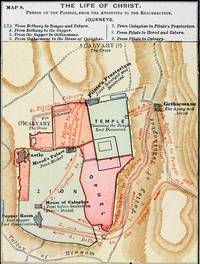 The Life of Jesus, Map 8: The Last Week in Jerusalem